

Blog
Center Table Designs in Nigeria 2026
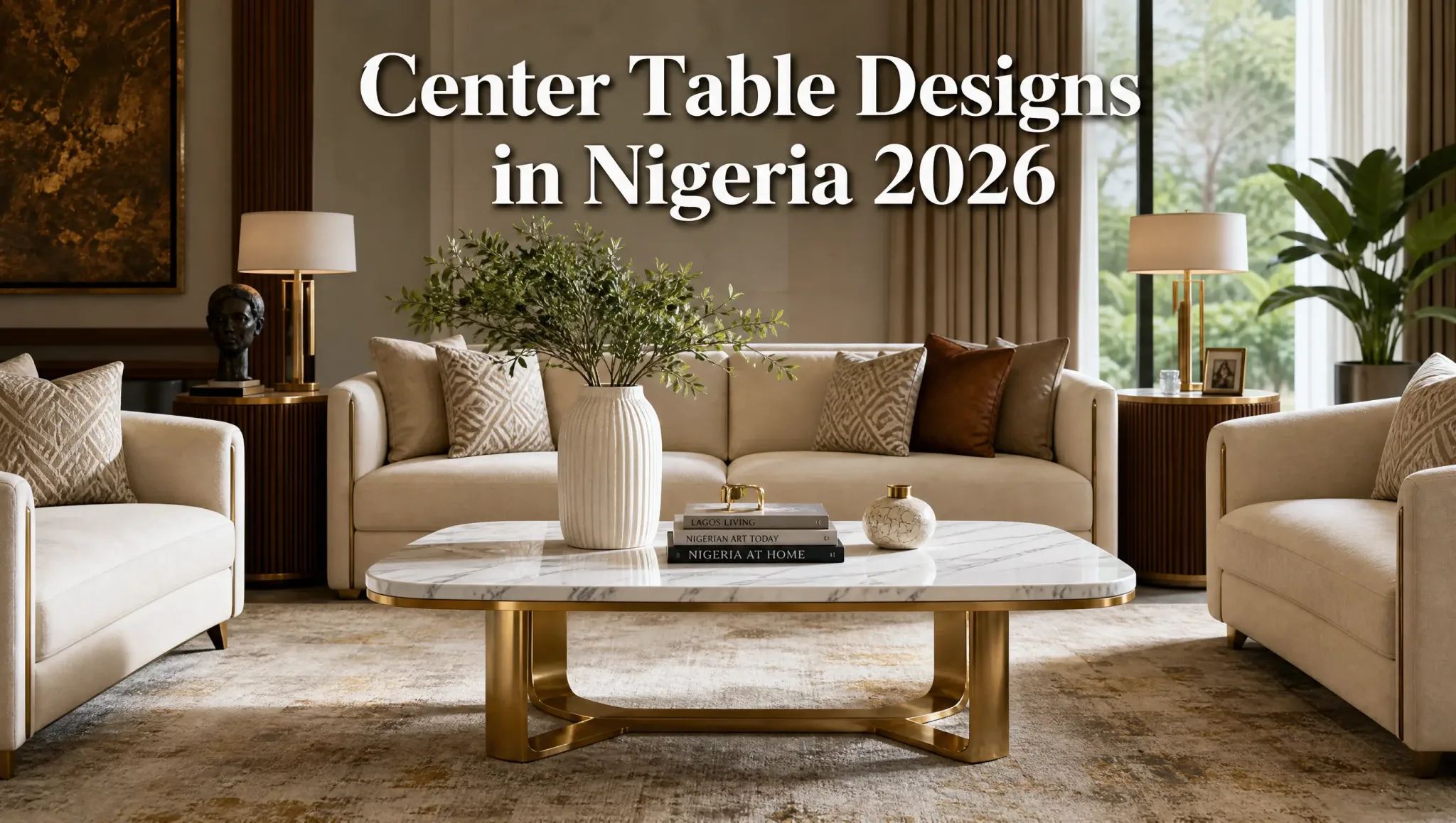
The centre table is the visual anchor of every Nigerian sitting room — the single piece every guest sees first when they walk in, the surface that ties the sofa set, rug and TV stand together, and the design statement that says more about your style than almost any other piece of furniture you own. This guide breaks down the most-requested center table designs in Nigeria for 2026 — by shape, material, style and how each design works in different room sizes.
Vento Furniture carries over 70 center table designs across modern, marble, glass, wooden, royal and minimalist styles. Every piece is designed to pair with our sofa sets, TV consoles and dining suites for fully coordinated Lagos, Abuja and Port Harcourt sitting-room installations. Browse the designs below to find the right look for your space — then visit our showroom or request a quote to see specific pieces in person.
Center Table Designs by Shape
Shape is the first design decision because it determines how the table fits the seating layout and the floor space.
Rectangular Center Tables
The classic shape and most popular choice across Nigerian living rooms. Rectangular tables pair naturally with L-shape sofas, 3+2+1 arrangements and any seating where two parallel sides face each other. Standard dimensions 100 – 130 cm long × 60 – 70 cm wide. Best for: medium and large sitting rooms, formal layouts, families that use the table daily.
Square Center Tables
Symmetrical, modern and balanced. Square tables (80 × 80 cm to 110 × 110 cm) sit neatly between two facing sofas in a classic Nigerian formal sitting-room arrangement. Best for: smaller square rooms, formal seating where the table is a centred styling feature, compact apartments.
Round Center Tables
Soft, conversational and child-safe. Round tables (60 – 110 cm diameter) eliminate sharp corners — the right choice for families with young children. Encourage 360° conversation across the table rather than the formal “head-of-table” hierarchy of rectangular shapes. Best for: small sitting rooms, family households, breakfast nooks, modern minimal interiors.
Oval Center Tables
Elegant compromise between rectangular capacity and round-shape softness. Oval tables (100 × 60 cm to 130 × 80 cm) seat more people than round tables of equivalent footprint while keeping the rounded edges. Best for: medium sitting rooms with 5- or 7-seater sofa arrangements, mixed adult/child households, formal modern interiors.
Irregular & Asymmetrical Designs
2026 has seen irregular shapes — pebble forms, free-flowing curves, sculptural designs — break into Lagos and Abuja luxury sitting rooms. The table becomes art rather than just a surface. Best for: modern minimal interiors where the centre table is a statement piece, designer homes, large rooms that can hold the visual weight of a sculptural piece.
Nesting Sets (2-in-1)
Two tables (one larger, one smaller) that tuck together when not in use and spread out when guests arrive. The Jumia “High Quality Exotic Original Marble 2 in 1 Nested Center Table” is a popular Nigerian reference for this format. Best for: compact apartments, flexible-use rooms, modern living spaces where seating capacity changes regularly.
Center Table Designs by Material
Wooden Center Table Designs
Wooden centre tables remain the most popular material across every Nigerian price tier. Hardwood (oak, walnut, mahogany, acacia) brings warmth, ages gracefully, and pairs with virtually any sofa style. Design variations include: solid wood with natural grain (modern minimal interiors), turned-leg classic wood (traditional Nigerian formal rooms), wood with metal frame (contemporary industrial style), and two-tier wooden with lower shelf (functional storage for books, magazines and remotes). Best for: family rooms, daily-use spaces, classical and modern interiors alike.
Glass Top Center Table Designs
Glass tops create openness and reflect light — making smaller Nigerian sitting rooms feel larger. Design variations include: tempered safety glass with stainless steel base (modern minimal), glass with brushed gold frame (luxury contemporary), two-tier glass with chrome legs (mid-century modern), and frosted glass with carved wood base (transitional style). Always specify tempered safety glass — the difference between a piece that lasts a decade and one that shatters within a year of family use.
Marble Center Table Designs
Marble is the design choice for formal Nigerian sitting rooms where the centre table is meant to be the focal point of the entire room. The natural veining means no two marble surfaces are identical. Design variations include: white Carrara marble with gold legs (luxury contemporary, the Zit “Royal Top Marble Center Table & Side Stools” reference), black marble with brushed steel base (modern dramatic), onyx marble with polyester polish (premium Lagos showrooms), green marble with brass detailing (2026 trend), and marble-pattern faux on engineered wood (budget-friendly entry point, ₦99,000 – ₦135,000 on Jumia).
Metal & Iron Center Table Designs
Metal and iron centre tables sit in the industrial-modern design space — increasingly popular in Lagos new-build apartments and co-working-inspired home offices. Design variations include: polished stainless steel base with glass top, wrought iron with wood top (rustic-industrial), brushed gold metal with marble top (luxury contemporary), and powder-coated black metal frame with stone top (Scandinavian minimal). Best for: modern Lagos apartments, industrial aesthetic interiors, co-working spaces.
Mirror & Mixed Material Designs
Mirror-top centre tables and mixed-material designs (glass + marble, wood + metal + glass) are growing in 2026 Nigerian premium interiors. Mirror tops reflect ceiling fixtures and create vertical light play. Mixed-material designs work best in eclectic interiors where the centre table bridges two different style languages from the sofa and the TV stand. Best for: glam interiors, luxury sitting rooms, transitional design schemes.
Center Table Designs by Style
Modern Center Table Designs
Clean lines, matte finishes, neutral palettes (white, black, cream, charcoal grey), minimal carved detail. Modern centre tables suit Lagos and Abuja new-build apartments and contemporary interiors where the rest of the room is intentionally simple. The piece supports the room rather than dominating it. Typical materials: matte wood, glass, brushed metal, faux marble. Pair with our modern sofa sets and minimalist TV consoles for fully coordinated modern living rooms.
Classic & Traditional Center Table Designs
Turned wooden legs, carved edges, deep wood tones (walnut, mahogany), often with lower display shelf. Classic centre tables anchor formal Nigerian sitting rooms and pair with tufted sofas, royal-style chairs and traditional decor. The piece communicates permanence and craftsmanship. Best for: formal sitting rooms in larger family homes, traditional interiors, Nigerian elders’ parlours.
Royal & Luxury Center Table Designs
Gold-leaf accents, marble or onyx tops, carved hardwood bases, often paired with matching side stools. Royal centre tables are statement pieces designed to communicate status in formal Nigerian sitting rooms. Match the Vento luxury collection sofa sets for fully coordinated royal-style installations. Best for: estate homes, full-luxury sitting rooms, formal entertainment spaces.
Minimalist Center Table Designs
Visually light, low-profile (40 – 45 cm height), single-material construction, no visible hardware or carved detail. Minimalist centre tables work in modern Lagos flats and Abuja apartments where the design intent is to maximise visual space. Typical pieces: round 60 – 80 cm pedestal table, single-slab wood top on hairpin legs, sculptural single-shape pieces. Best for: small apartments, modern interiors, design-conscious buyers.
Industrial & Rustic Center Table Designs
Reclaimed wood, exposed metal joinery, distressed finishes, visible hardware. Industrial-rustic centre tables suit Lagos creative-loft interiors, modern co-working-style home offices, and converted spaces. Increasingly popular among younger professionals in Lekki, Ikoyi and Abuja Wuse. Best for: modern industrial interiors, creative homes, mixed traditional-modern spaces.
Center Table Design Trends in Nigeria 2026
Three design directions account for most of what we are seeing requested in Vento Lagos and Abuja showrooms in 2026.
1. Marble-everything. Marble centre tables have moved from premium-only to a mainstream design choice across mid-tier Lagos and Abuja sitting rooms. Faux-marble on engineered wood (₦99,000 – ₦150,000 on Jumia) made marble accessible to the budget tier; real-stone marble centre tables (₦300,000 – ₦2,000,000+ at Vento, Furniture Plug, Decorahub) dominate the premium tier. Most-requested 2026 colourways: white Carrara with gold legs, black marble with brushed steel, and the emerging green marble with brass detailing.
2. Sculptural irregular shapes. Pebble-form, free-curve, and asymmetrical centre tables broke into Lagos luxury sitting rooms in 2026. The table becomes art rather than just a functional surface. Best in rooms where the rest of the furniture is intentionally simple — the irregular table cannot share visual weight with a busy sofa or patterned rug.
3. Two-tier and multi-functional designs. Centre tables with integrated drawers, lower display shelves, or 2-in-1 nesting configurations are growing in Lagos new-build apartments where storage and flexibility matter. Modern Nigerian buyers increasingly want centre tables that store remotes, magazines and game controllers without adding visual clutter.
What is moving out of fashion in Nigerian sitting rooms is the heavy carved wooden block centre table without storage, the basic clear-glass-on-thin-chrome-legs piece (replaced by tempered glass on heavier brushed-metal bases), and the gold-only royal style without marble or stone material complement.
Center Table Designs by Room Size
| Sitting Room Size | Recommended Shape | Recommended Width | Best Material |
|---|---|---|---|
| Compact (under 12 m²) | Round or oval | 60 – 80 cm diameter | Glass, faux marble, light wood |
| Small (12 – 16 m²) | Round, square or compact rectangular | 80 – 100 cm | Wood, glass, faux marble |
| Medium (16 – 22 m²) | Rectangular or oval | 110 – 130 cm | Wood, marble, mixed materials |
| Large (22 – 30 m²) | Rectangular or sculptural | 130 – 160 cm | Marble, premium wood, mixed materials |
| Extra Large (30 m²+) | Multiple pieces or oversized rectangular | 160 cm+ or nesting set | Marble with matching side stools, royal-tier pieces |
Width rule: The centre table should be roughly two-thirds the length of your sofa. A 7-seater sofa around 2.4 m long needs a centre table 150 – 170 cm wide; a 5-seater needs 120 – 140 cm; a 3-seater pairs best with 90 – 110 cm. Going wider crowds the seating; going narrower makes the table look lost.
How to Choose the Right Center Table Design
Three questions narrow the choice from 70+ designs to the right two or three for your specific room.
1. What does the rest of the room look like? If your sofa and TV stand already make strong design statements, choose a simpler centre table — let it support rather than compete. If the room feels understated, the centre table is your opportunity to add a striking visual element right in the middle.
2. How is the table actually used? Purely decorative with a vase and a few accessories → slim glass-top design works. Family uses it for meals, homework, board games and daily drinks → choose solid wood or marble that handles real life without you worrying about every spill. Hosts guests frequently → rectangular or oval that seats multiple people around it comfortably.
3. Who lives in the home? Households with young children → avoid sharp corners (rectangular and square), choose round or oval, prioritise tempered safety glass if going with glass tops. Adult-only households → any shape works; design freedom is highest.
Visit a showroom. Photos rarely capture a centre table’s full presence — the weight of marble, the depth of a wood grain, the way light reflects off polished metal. Bring photos of your sitting room (one straight-on of the sofa, one from above showing floor space) to any Vento Lagos, Abuja or Port Harcourt showroom and our consultants will match a design in five minutes. For pricing across each design tier, see our center table prices guide.
Browse All Center Tables Get Design Consultation
Styling & Decorating Your Center Table
The centre table is the most-touched and most-seen surface in a Nigerian sitting room — how you style it changes how the whole room reads. Use these classic styling rules to balance the table without cluttering it.
The Rule of Three. Arrange decor in groups of three different heights — a tall vase, a medium candle, a small object. Three creates visual rhythm without symmetry boredom. Five works for larger tables; one massive single piece works for sculptural designs.
Add a tray. A decorative tray gathers loose items (remotes, coasters, small books) into a single defined zone. Visually grounds the styling and prevents clutter from spreading across the surface.
Layer with books and magazines. Two or three coffee-table books stacked horizontally create a foundation for smaller decor objects on top. Adds height variety and visual interest.
Bring in greenery. One single statement plant or a small bouquet adds life and softens hard surfaces (especially marble and glass). Real plants beat fake — even small succulents.
Seasonal swaps. Change one or two decor items quarterly (festive candle holders for December, dry grass arrangement for Harmattan, fresh flowers for spring). Keeps the styling fresh without buying new furniture.
Avoid overcrowding — a centre table styled with 8+ small objects looks cluttered. Aim for 3 – 5 deliberate pieces with visual hierarchy.
Frequently Asked Questions
What are the different types of center table designs?
Center table designs are categorised by shape (rectangular, square, round, oval, irregular, nesting), material (wood, glass, marble, metal, mirror, mixed), and style (modern, classic, royal, minimalist, industrial). The most popular Nigerian combinations in 2026 are modern rectangular wood, round marble with gold legs, and 2-in-1 nested marble for compact apartments.
What is the latest center table design in Nigeria 2026?
The three biggest 2026 design trends in Nigeria are marble-everything (Carrara with gold legs, black with brushed steel, emerging green marble), sculptural irregular shapes (pebble forms, free curves, asymmetrical pieces), and two-tier multi-functional designs with integrated drawers or lower display shelves. Faux-marble on engineered wood made marble look mainstream at the ₦99K – ₦150K budget tier.
What is the standard size for a centre table?
The Nigerian sitting-room standard is approximately 45 cm tall × 70 cm wide × 120 cm long (18″ × 28″ × 48″), pairing with a typical 3-seater or 5-seater sofa. Width should be roughly two-thirds the length of the adjacent sofa. Smaller rooms suit 60 – 80 cm round tables; larger sitting rooms scale up to 150 – 170 cm rectangular.
How high should a center table be?
The standard centre table height in Nigeria is 40 – 46 cm (16 – 18 inches). The table top should sit 2 – 5 cm below the sofa cushion height, so you can rest a glass without reaching up. Most Vento centre tables are designed at 40 – 45 cm to pair correctly with our sofa range.
What is the best center table design for a small Nigerian sitting room?
For compact sitting rooms (under 12 m²), choose a round or oval table 60 – 80 cm in diameter rather than a long rectangular one. The smaller footprint preserves walkway space, eliminates sharp corners, and creates a more conversational seating arrangement. Two-piece nesting sets are an even better option — they tuck together when not in use and spread out for guests.
What is the best center table design for a living room with kids?
For households with young children, choose round or oval shapes (no sharp corners), tempered safety glass if going with glass tops (significantly stronger than regular glass), and solid wood or marble that handles spills, scratches and impacts better than thin laminate. Avoid floor-pooled tablecloths and loose decor that toddlers can pull.
Which material is best for a centre table in Nigeria?
For daily-use family rooms, solid wood with hardwood frame wins — durable, forgiving with spills, and ages well. For modern small rooms, glass on metal base creates visual openness. For formal sitting rooms, real marble with polished metal or carved wood base delivers the statement piece. For budget-conscious buyers wanting the marble look, faux marble on engineered wood at ₦99K – ₦150K works for 3 – 5 years of light use.
How do I style or decorate a center table?
Apply the Rule of Three — group decor in trios of different heights (tall vase + medium candle + small object). Add a decorative tray to ground loose items like remotes and coasters. Layer coffee-table books stacked horizontally for visual foundation. Bring in fresh greenery or a single statement plant for life and softness. Aim for 3 – 5 deliberate pieces total — avoid overcrowding.
What shape center table works with an L-shape sofa?
L-shape and corner sofas pair best with rectangular center tables (110 – 150 cm wide) placed parallel to the longer wing of the sofa. Rectangular shapes match the linear visual flow of the L-shape and provide enough surface area for two parallel rows of seating. Oval tables are the secondary best option — they soften the angular geometry of the L-shape while providing similar capacity.
How much does a designer center table cost in Nigeria?
Designer center table designs in Nigeria range widely by material and complexity. Modern glass and faux-marble designs start ₦99,000 – ₦150,000 (Jumia tier). Mid-tier wooden and marble designs from brand retailers (Eunicon, Decorahub, HOG, Furniture Plug) sit at ₦150,000 – ₦600,000. Premium Vento designer pieces with real marble, hardwood frames and matching side stools cover ₦460,000 – ₦3,085,000. For detailed pricing by tier, see our Center Table Prices in Nigeria guide.
Can I get a custom center table design at Vento?
Yes — Vento works with luxury and royal-tier customers on custom centre table commissions, primarily for full-room coordinated installations where the centre table is matched to a specific sofa set, dining suite or wardrobe finish. Custom centre tables typically take 6 – 10 weeks from design approval to delivery and start at ₦1,500,000 depending on material and detail complexity. Request a custom design consultation at any Vento showroom.
Does Vento deliver center tables nationwide?
Yes — Vento delivers centre tables nationwide across Nigeria. Lagos delivery is free at every price tier and includes professional placement inside your sitting room. Abuja and Port Harcourt delivery is quoted separately and also includes placement on arrival. Other cities and states are quoted by our logistics team with reinforced packaging for glass and marble surfaces during transport.
What centre table designs pair with traditional Nigerian decor?
Traditional Nigerian sitting rooms typically pair best with classic wood centre tables with turned legs and carved edges (walnut, mahogany, or dark-stained hardwood) or royal-tier marble with carved hardwood bases. Match the centre table tone to the existing wood furniture in the room — if your TV stand and side tables are walnut, the centre table should be walnut. Avoid mixing 3+ wood tones in a single sitting room.
