

Blog
Fabric vs Leather Sofa: Which Is Best for a Nigerian Home? (2026 Guide)
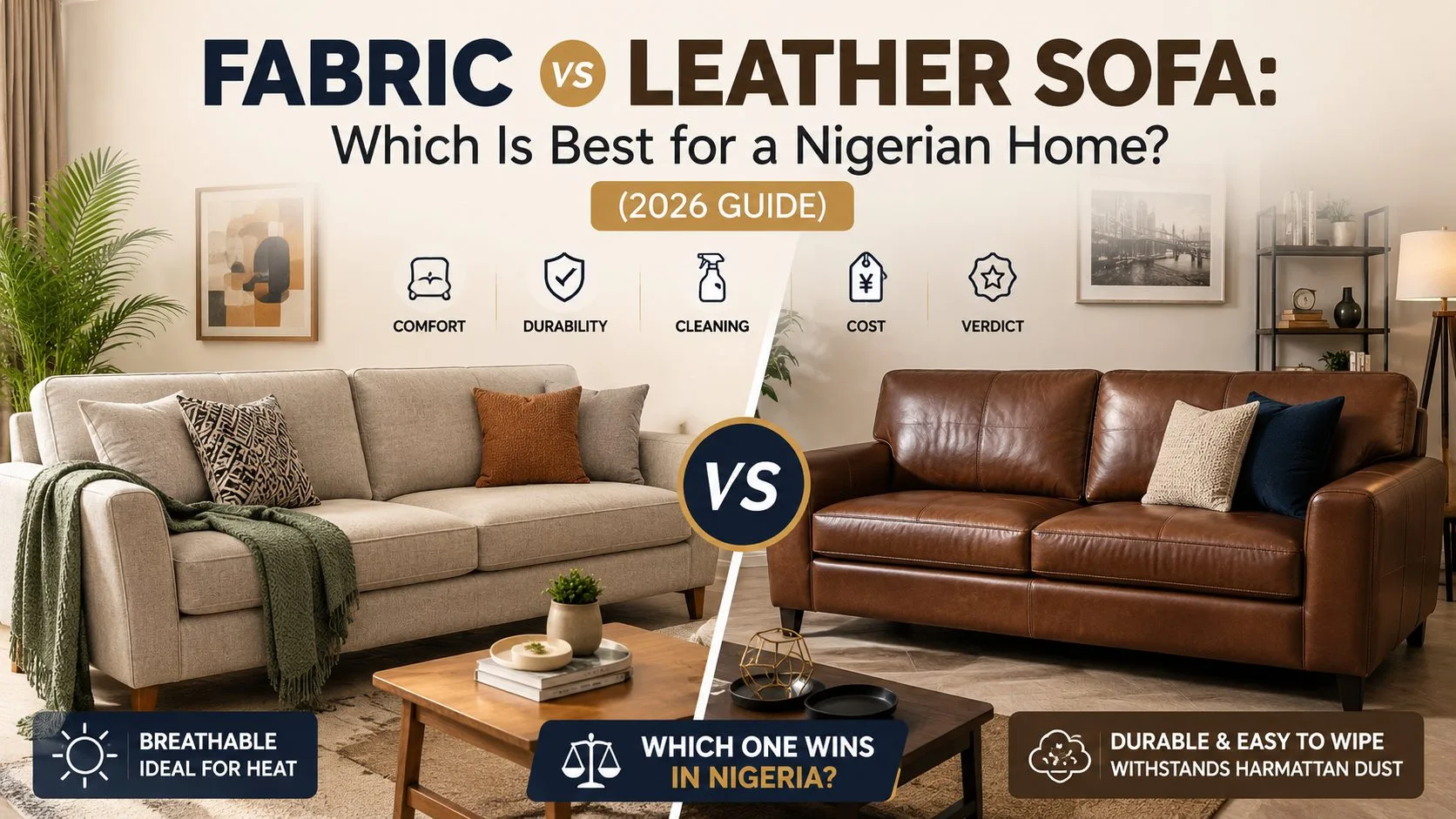
Quick answer: For most Nigerian homes, a fabric sofa is the more comfortable everyday choice because it breathes in the heat and humidity, feels soft and warm, and costs less — while a leather sofa wins on durability, a premium look and wipe-clean convenience during harmattan dust, but can feel hot and sticky in humid weather and cracks if it is cheap or left in the sun. Choose fabric for families, comfort and value; choose good-quality leather for a formal, low-maintenance, long-lasting statement. Both are available in our sofa sets collection.
The sofa is the biggest, most-used and most-expensive piece of furniture in most Nigerian sitting rooms, so the fabric-versus-leather decision is one worth getting right. It shapes how the room looks, how comfortable it feels to sit on through a hot afternoon, how easily it survives children and guests, and how many years you get before you replace it. The generic advice online is written for cooler European and American homes — this guide answers the question for the Nigerian climate specifically, weighing comfort, durability, cleaning, cost and how each material actually copes with heat, humidity, harmattan dust and strong sun.
Fabric vs Leather Sofa at a Glance
Before the detail, here is how the two materials compare across the things that matter most when buying a sofa in Nigeria.
| Factor | Fabric sofa | Leather sofa |
|---|---|---|
| Comfort in the heat | Breathable, stays soft and warm | Can feel hot and sticky in humidity |
| Durability | Good; can pill or stain over time | Excellent; genuine leather lasts 15–20 years |
| Cleaning | Vacuum & spot-clean; covers may be washable | Wipe clean in seconds; best in harmattan dust |
| Spills & stains | Absorbs spills unless treated | Wipes off before it soaks in |
| Cost | Generally more affordable | Genuine leather costs more; faux is cheapest |
| Look & feel | Warm, casual, endless colours | Formal, premium, ages with character |
| Best for | Families, comfort, everyday use, value | Formal rooms, low-maintenance, longevity |
How Each Performs in the Nigerian Climate
This is the factor most buying guides ignore, and the one that matters most in Nigeria. Heat, humidity, harmattan dust and strong sun affect fabric and leather very differently, and it is often the deciding point.
Fabric in Nigerian heat and humidity
Fabric is breathable, so it does not trap body heat the way a non-porous surface does — you can sit on a fabric sofa through a warm, un-air-conditioned afternoon without your skin sticking to it. The trade-off is that fabric absorbs moisture, so in very humid coastal areas like Lagos and Port Harcourt it needs air circulation to avoid holding damp, and harmattan dust settles into the weave and has to be vacuumed out regularly. Tightly woven, breathable fabrics cope far better with Nigerian humidity than cheap, dense synthetics that feel sticky and trap heat.
Leather in Nigerian heat and humidity
Leather does not absorb sweat or spills, which is a real advantage during harmattan — dust wipes straight off rather than settling into a weave. But because it is non-porous, leather can feel hot and sticky against bare skin in humid heat, especially without air conditioning. Genuine leather also needs occasional conditioning: constant strong sun and the very dry harmattan air can dry it out and cause cheaper leather to crack or fade over time. Keep a leather sofa out of direct, all-day sunlight and it will reward you with years of easy-clean service.
Comfort and Feel
Fabric is the softer, warmer material to sit on. It has give, it comes in an enormous range of textures from linen-weave to velvet to boucle, and it feels immediately inviting — which is why fabric is the default for family sitting rooms where people lounge for hours. Leather feels cooler and firmer at first touch and softens beautifully over years of use, developing a lived-in patina that many people prize. For a relaxed family lounge, fabric usually feels more comfortable day to day; for a formal reception room where the sofa is admired as much as used, leather’s structured feel suits the setting. Cushion construction matters as much as the covering here: a fabric or leather sofa with high-resilience foam and a well-sprung seat stays comfortable for years, while cheap foam flattens within months regardless of what covers it. When you test a sofa in a showroom, sit right back into it for a minute rather than perching on the edge — that is the only reliable way to judge whether the comfort will last through the long evenings a Nigerian sitting room is built for.
Durability and Lifespan
Genuine leather is the more durable material and typically outlasts fabric — a good-quality leather sofa can last 15 to 20 years, ageing gracefully rather than wearing out. Fabric sofas last well too, but they are more prone to pilling, fading and staining over time, and light-coloured fabric shows wear sooner. The crucial caveat in Nigeria is quality: cheap “faux leather” or bonded leather peels, flakes and cracks within a couple of years, especially in heat and humidity, so it does not deliver leather’s durability advantage at all. Real durability comes from a genuine-leather or a tightly-woven quality fabric on a solid, kiln-dried hardwood frame — the frame matters as much as the covering. In the Nigerian climate a poorly-made frame is the hidden failure point: softwood or particle-board frames absorb humidity, warp and start to creak within a few years, at which point even good upholstery is wasted. A well-built sofa of either material, kept out of standing damp and direct sun, should comfortably serve a family for a decade or more, which is why buying quality once is usually cheaper than replacing a bargain sofa every few years.
Cleaning and Maintenance
Leather is the easier material to keep clean: spills, dust and sticky fingers wipe off with a damp cloth before they can soak in, which is a genuine advantage in a household with children or during dusty harmattan months. It asks only for an occasional leather conditioner to stay supple. Fabric takes more effort — regular vacuuming to lift out dust, prompt spot-cleaning of spills before they set, and heavier work if a stain dries in. The upside is that many quality fabric sofas come with removable, washable covers and stain-resistant treatments, which close much of the gap. If low-maintenance is your priority, leather wins; if you are willing to vacuum and can choose a stain-resistant, removable-cover fabric, the difference narrows.
Best for Families with Children and Pets
For homes with young children, leather has a strong case: spilled drinks, food and crayon wipe off its surface where they would soak into and stain fabric. The counter-argument is that leather scratches — a pet’s claws or a sharp toy can leave permanent marks that fabric would shrug off, and torn leather is hard to repair invisibly. The practical middle ground many Nigerian families choose is a stain-resistant fabric in a mid-to-dark tone: forgiving of spills, warm and comfortable for children to climb on, and cheap enough to worry about less. Avoid light-coloured delicate fabrics and thin faux leather in a busy family home; both show damage fastest.
Hygiene, Allergies and Everyday Living
Leather has a quiet advantage for anyone in the household with dust or allergy sensitivity: its smooth, non-porous surface gives dust, pet dander and mites nowhere to lodge, and a quick wipe removes them entirely. Fabric, by contrast, traps dust deep in its weave — a real consideration during harmattan, when fine dust settles everywhere — so it needs regular vacuuming to stay hygienic, and a household with allergy sufferers may find leather easier to live with. That said, a good fabric sofa with removable, washable covers closes much of the gap, since the covers can be laundered on a schedule. Odours are the mirror image: fabric can absorb and hold smells from food, smoke or damp, while leather stays odour-neutral and wipes fresh. For kitchens-open-to-parlour layouts common in newer Nigerian homes, that odour resistance is worth weighing.
Cost — What You Pay in Nigeria
As a rule, fabric sofas are the more affordable choice, genuine leather sits at the top of the price range, and cheap faux leather is the least expensive but the poorest value because it does not last. What you actually pay depends far more on build quality than on the covering alone — a well-made fabric sofa on a hardwood frame will outlast and outperform a cheap leather-look sofa at the same price. For current price ranges across styles and materials, our sofa set price guide breaks down what to expect, and the design directions are covered in our guide to the best sofa set designs for Nigerian homes.
Style and Look
Fabric and leather send different design signals. Fabric reads warm, casual and current, and its near-endless choice of colours and textures makes it easy to match to any sitting-room scheme — from a soft neutral that blends in to a bold statement piece. Leather reads formal, timeless and premium; it anchors a room with a sense of quality and works especially well in classic, luxury and masculine interiors. If your sitting room leans modern, relaxed or family-focused, fabric usually suits it best; if it leans formal, executive or luxury, leather makes the stronger statement. Both pair well with the rest of a coordinated room — see our Nigerian living room design ideas for how to build the scheme around either, and our guide to L-shaped sofa designs if an L-shape suits your space.
Colour Choices for Fabric and Leather Sofas in Nigeria
Colour behaves differently on each material, and choosing well is part of getting the decision right. Fabric offers the widest palette and the easiest way to make a statement or blend in, while leather comes in a narrower, more classic range of tones that read premium. These are the colour directions that work best in Nigerian sitting rooms:
- Fabric — neutral tones (grey, beige, soft brown): the safest, most flexible choice; they hide everyday wear and let you restyle the room with cushions and curtains.
- Fabric — deep or warm accents (charcoal, forest green, terracotta): forgiving of marks and ideal when you want the sofa to be the room’s statement piece.
- Leather — brown and tan: the classic, warm choice that ages into a rich patina and suits traditional and luxury interiors.
- Leather — black, cream or grey: black reads formal and executive, while cream and grey feel modern — but light leather shows scuffs sooner and needs more care.
Whichever material and colour you choose, carry two or three colours through the room — the sofa, the cushions and the curtains — so the space reads as planned rather than accidental. Darker tones are the practical default for a busy family sitting room in either material.
Genuine Leather vs Faux Leather vs Fabric
In Nigeria the choice is really three-way, because a large share of “leather” sofas on the market are actually faux leather — and the difference decides whether you get leather’s benefits at all.
Genuine leather
Real hide: durable, breathable-for-a-hide, and it ages into a rich patina. It is the most expensive covering and the longest-lasting, and it delivers the wipe-clean and longevity advantages leather is known for. This is the option to choose if you want a true leather sofa that lasts.
Faux leather (leatherette / PU)
A synthetic coating made to look like leather at a fraction of the price. It looks convincing when new but, in Nigerian heat and humidity, cheaper faux leather peels, flakes and cracks — often within one to three years. It can suit a low-budget or short-term setup, but it does not offer the durability that justifies choosing “leather” in the first place.
Fabric
Woven upholstery in cotton, linen, polyester blends, velvet or boucle. Comfortable, breathable, endlessly varied and generally better value than genuine leather — the best all-round choice for most Nigerian family homes, provided you pick a quality, tightly-woven, ideally stain-resistant fabric on a solid frame.
So Which Should You Choose?
There is no universal winner — the right answer depends on your household, your room and how you live. Use these simple rules to decide.
Choose a fabric sofa if…
You want the most comfortable everyday seating in Nigeria’s heat, you have children who will lounge and play on it, you like changing your room’s look with colour and texture, or you want the best comfort for your money. Fabric is the right default for most family sitting rooms.
Choose a leather sofa if…
You want a formal, premium look, the longest lifespan, and the easiest surface to wipe clean through harmattan dust and daily spills — and you are buying genuine leather, not thin faux leather. Leather suits reception rooms, luxury interiors and low-maintenance households, ideally in an air-conditioned or shaded room.
Consider a blend or accent mix if…
You are torn, pair the two: a fabric main sofa for everyday comfort with a leather accent chair for a touch of formality, tying them together with a shared colour. This is a common, practical choice in Nigerian homes that want the comfort of fabric and a hint of leather’s polish.
Where to Buy Fabric and Leather Sofas in Nigeria
The surest way to choose between fabric and leather is to sit on both in person — feel how each one handles the heat, test the give of the cushions and judge the quality of the covering and the frame before you commit. Vento Furniture displays fabric and leather sofa sets, styled in complete sitting-room settings, across ten showrooms in Lagos, Abuja, Port Harcourt and Kaduna. Browse the full range online through our sofa sets collection and visit your nearest Vento showroom to compare materials side by side, with delivery and installation nationwide. Whichever you choose, buying a quality covering on a solid hardwood frame is what makes a Vento sofa last.
Frequently Asked Questions
Which is better for a sofa, leather or fabric, in Nigeria?
For most Nigerian homes, fabric is the better everyday choice because it breathes in the heat and humidity, feels soft and comfortable, and costs less. Leather is better for formal rooms, low maintenance and longevity — but only genuine leather, since cheap faux leather cracks in Nigerian heat. Choose fabric for families and comfort, leather for a premium, wipe-clean statement.
Do fabric sofas last longer than leather?
Genuine leather usually lasts longer than fabric — a good leather sofa can last 15 to 20 years, ageing gracefully, while fabric is more prone to pilling, fading and staining. However, cheap faux leather lasts far less than quality fabric, often peeling within one to three years. Lifespan depends most on the quality of the covering and the frame beneath it.
What are the disadvantages of a leather sofa in Nigeria?
A leather sofa can feel hot and sticky against bare skin in Nigeria’s humid heat, especially without air conditioning. Genuine leather is expensive, it scratches, and it needs occasional conditioning to stop it drying out in harmattan air or strong sun. Cheap faux leather is the biggest pitfall, as it peels and cracks within a couple of years.
Is a fabric or leather sofa better for families with children?
Leather wipes clean easily, which suits messy spills, but it scratches and tears. Many Nigerian families choose a stain-resistant fabric sofa in a mid-to-dark tone instead — it is forgiving of spills, comfortable for children to climb on, and affordable enough to stress less about. Avoid light delicate fabrics and thin faux leather in a busy family home.
Which is cheaper, a fabric or leather sofa?
Fabric sofas are generally more affordable than genuine leather, which sits at the top of the price range. Faux leather is the cheapest option but the poorest value because it does not last. What you pay depends more on build quality than the covering — a well-made fabric sofa on a hardwood frame beats a cheap leather-look sofa at the same price.
Does leather crack in the Nigerian climate?
Genuine leather can dry out and crack if it is left in constant strong sunlight or neglected through very dry harmattan air, but occasional conditioning and keeping it out of direct sun prevent this. Cheap faux (bonded) leather cracks and peels far sooner in Nigerian heat and humidity, often within one to three years, regardless of care.
Which sofa stays cooler in hot weather?
Fabric stays more comfortable in Nigeria’s humid heat because it breathes and does not stick to the skin. Leather is non-porous, so while it does not absorb heat, it can feel hot and sticky against bare skin in humid weather, particularly in a room without air conditioning.
How do I clean a fabric or leather sofa?
Clean a leather sofa by wiping it with a soft damp cloth and applying leather conditioner occasionally to keep it supple. Clean a fabric sofa by vacuuming regularly to lift dust, spot-cleaning spills promptly before they set, and washing removable covers where the design allows. Deal with spills quickly on both materials.
Is genuine leather worth it over faux leather?
Yes — genuine leather is worth the extra cost if you want a true leather sofa, because it lasts 15 to 20 years and ages well, while faux leather peels and cracks within a couple of years in Nigerian conditions. If genuine leather is out of budget, a quality fabric sofa is a better choice than cheap faux leather.
Where can I buy fabric and leather sofas in Nigeria?
You can buy both fabric and leather sofa sets from Vento Furniture, online and across ten showrooms in Lagos, Abuja, Port Harcourt and Kaduna, where you can compare the materials side by side before choosing, with delivery and installation nationwide.