

Blog
How to Furnish a Home in Nigeria: Room-by-Room Guide & 2026 Cost Breakdown
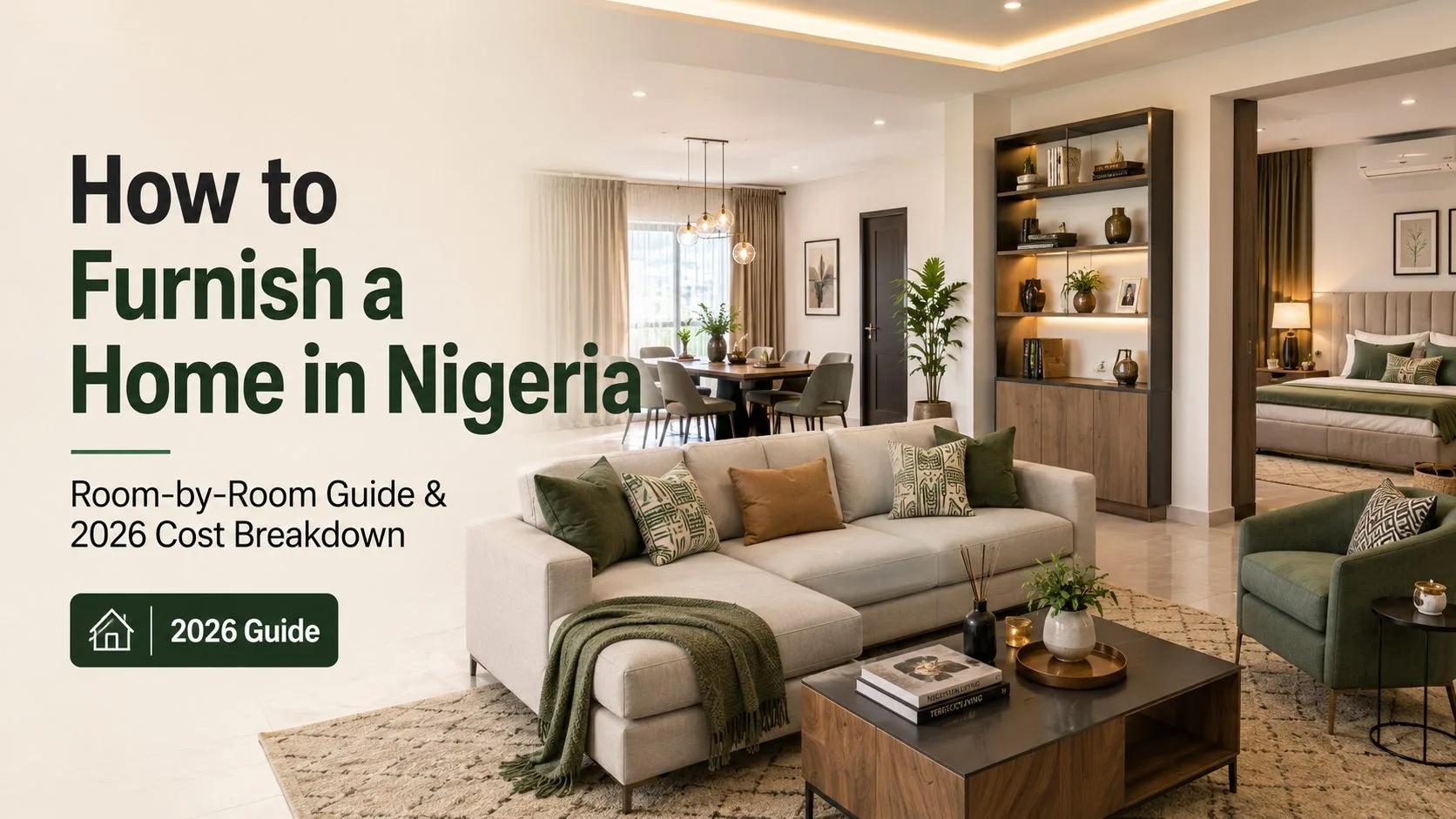
Quick answer: To furnish a home in Nigeria, plan the whole house first, set a budget, and buy in priority order — start with the bed and the sitting-room seating (the pieces you use most), then the dining area, then storage, curtains and the extras. As a 2026 planning guide, furnishing a typical 2–3 bedroom home costs roughly ₦2.5m–₦4.5m for a budget setup, ₦5m–₦12m for a mid-range home, and ₦15m upward for a luxury finish. Buy coordinated sets rather than mismatched pieces for the best value, and invest first in the furniture you use every day.
Moving into a new home — whether it is your first apartment, a family house or an upgrade across town — comes with a room full of empty spaces and a long list of things to buy. Furnished well, those rooms become the places you live your life; furnished in a rush, they become a collection of pieces that never quite fit together. The difference is a plan. This guide walks through how to furnish a home in Nigeria step by step: the order to buy in, what each room needs, roughly what it costs in 2026, and the simple rules that make any room work — so you can turn an empty house into a home that feels considered and lasts for years.
Start With a Plan and a Budget
The single biggest mistake first-time furnishers make is buying piece by piece, room by room, as money allows — and ending up with furniture that does not coordinate. Before you buy anything, walk through the whole home and make a list of what each room genuinely needs, room by room. Separate the essentials (a bed, seating, a dining table) from the nice-to-haves (a second sofa, a bar stool, extra décor) so you know where the money has to go first.
Then set a realistic total budget and split it across the rooms by how much each one is used. Your bedroom and sitting room earn the largest share because you spend the most time in them; guest rooms and studies can wait or take hand-me-downs. Working to a plan rather than an impulse also lets you buy coordinated sets — a matched sofa suite or a full bedroom set — which almost always looks better and costs less than assembling mismatched pieces one at a time. Measure every room before you shop; the most common furnishing regret in Nigerian homes is buying pieces that turn out too big for the space.
The Order to Furnish a Home — What to Buy First
When every room is empty, it is hard to know where to start. The answer is to furnish in order of how much each piece is used and how hard it is to live without. This is the priority order we recommend for Nigerian homes.
1. The Bed and Master Bedroom
You need somewhere to sleep from night one, so the bed comes first. Invest in a quality bed frame and mattress before anything else — it is the piece you use most and replace least. A coordinated bedroom set with matching bedsides and a dresser gives the room a finished look from the start, and our bed frame price guide breaks down what each size costs.
2. Sitting-Room Seating
The sitting room is where you relax and receive guests, so a comfortable, well-chosen sofa set is the next priority. It anchors the whole room’s colour and layout, which is why it is worth buying before the smaller pieces around it. A 5- to 7-seater suits most family parlours; a 3-seater plus an accent chair works for compact flats.
3. The Dining Area
A place to eat together comes next. A dining set sized to your household — four seats for a couple, six to eight for a family — turns a corner or a room into a place for shared meals. If you already have a table, a set of matching dining chairs completes it.
4. Storage and Wardrobes
Once the main living pieces are in, storage keeps the home from descending into clutter. A wardrobe in the bedroom, a TV console with concealed storage, and side cabinets give everything a home. Our guide to wardrobe designs in Nigeria covers the styles and sizes that suit Nigerian bedrooms.
5. Anchor Pieces — TV Console and Centre Table
With the big items placed, two pieces pull the sitting room together: a TV stand or console on one wall and a centre table grounding the seating. These finish the room and make it feel complete rather than sparse.
6. Curtains, Soft Furnishing and the Extras
Finally, the layers that make a house feel like a home: curtains to frame the windows and control light, a rug to anchor the seating, cushions, lamps, art and plants. A home office desk, outdoor seating and guest-room furniture belong in this last wave, added as budget and need allow.
How Much Does It Cost to Furnish a Home in Nigeria?
Cost is the question every new homeowner asks and few guides answer honestly, because it depends entirely on quality tier and home size. The table below is a 2026 planning guide for furnishing the main rooms of a typical 2–3 bedroom Nigerian home at three quality levels — for the detailed breakdown of any single item, follow the price-guide links throughout this article.
| Room / area | Budget-friendly | Mid-range | Premium / luxury |
|---|---|---|---|
| Sitting room (sofa, centre table, TV console) | ₦800k – ₦1.5m | ₦1.5m – ₦4m | ₦4m + |
| Master bedroom (bed set + wardrobe) | ₦600k – ₦1.2m | ₦1.2m – ₦3m | ₦3m – ₦12m |
| Dining area (table + chairs) | ₦450k – ₦900k | ₦900k – ₦1.8m | ₦1.8m – ₦4m |
| Curtains & soft furnishing (whole home) | ₦150k – ₦400k | ₦400k – ₦1m | ₦1m + |
| Home office / study (desk + chair) | ₦450k – ₦900k | ₦900k – ₦1.8m | ₦1.8m – ₦4m |
| Approx. total (2–3 bedroom home) | ₦2.5m – ₦4.5m | ₦5m – ₦12m | ₦15m + |
These figures cover furniture only — budget separately for a mattress, kitchen fittings, appliances and electronics, which are bought outside a furniture retailer. The smartest way to stretch a furnishing budget is to buy coordinated sets rather than mismatched pieces, and to invest first in the items you use daily and keep longest: the bed and the sofa.
If the full amount is more than you want to spend at once, phase the spending rather than dropping quality. Furnish the bedroom and the sitting room properly in the first wave, live with a modest dining setup and a bare study for a few months, then add the remaining rooms as budget recovers. Buying two rooms well beats furnishing five rooms cheaply and replacing everything within a couple of years — quality furniture bought once is almost always cheaper over its lifetime than a bargain setup that has to be redone. Many buyers also spread the cost through an instalment plan on the larger sets rather than delaying the purchase entirely.
Furnishing the Sitting Room
The sitting room is the room guests see and the family uses most, so it earns the largest share of the budget. Build it around the seating: a sofa set sized to the room — a 5- or 7-seater for a family parlour, a 3-seater and an accent chair for a compact flat — sets the colour scheme and the layout for everything else. Neutral upholstery in grey, beige or brown keeps the room flexible and hides everyday wear.
Add a centre table to ground the seating and give guests a surface, and a low, wide TV console with concealed storage on the opposite wall to complete the composition and hide cables. Frame the windows with curtains, define the seating with a rug, and finish with a few considered details — a mirror, art above the sofa, a plant. These final layers are what separate a furnished room from a designed one. At a Vento showroom these pieces are displayed as complete sitting-room settings — sofa, centre table, console and curtains styled together — so you can judge how they work as a whole before you buy rather than assembling them blind.
Furnishing the Bedroom
The bedroom is where furnishing should begin and where quality matters most, because a good bed is bought once and kept for years. Start with the bed frame and mattress, then add the pieces that make the room work: two bedsides to frame the bed, a dresser, and a wardrobe to keep clothing out of sight. Buying these as a coordinated bedroom set gives the room a unified, finished look and usually earns a bundle discount over buying piece by piece — a Vento bedroom set arrives with the bed, bedsides, dresser and wardrobe all sharing one wood species and finish. Keep the palette calm and leave clear walkways around the bed so the room feels restful rather than crowded, and choose neutral bedding you can restyle with cushions and curtains over time.
Furnishing the Dining Area
Whether it is a dedicated dining room or a corner of an open-plan space, the dining area needs a table and chairs sized to your household and the room. A four-seater suits a couple or a small flat; a six- to eight-seater suits a family or a home that entertains. Match the dining set finish to the rest of the home — warm wood, marble-top or glass — and leave enough clearance around the table for people to pull chairs out and pass behind comfortably. If you are replacing seating for an existing table, coordinated dining chairs at the right seat height finish it neatly.
Furnishing a Home Office or Study
With hybrid work now normal in Lagos, Abuja and beyond, a proper home workspace has become an essential rather than a luxury. You do not need a whole room — a well-chosen desk in a spare corner works — but you do need the right desk and a supportive chair, because a workspace used for full days has to be comfortable and stable. A compact 1.2–1.4 m desk suits most home offices; size up to an executive office table if the room and the role call for it. Position the desk for good natural light and a tidy background for video calls.
Furnishing a Small Flat or First Apartment
A first apartment or a compact flat calls for smarter choices, not lower ambitions. The moves that make the biggest difference on a tight footprint and budget:
- Buy multi-functional pieces — a storage bed, a console that doubles as a desk, an ottoman that stores and seats.
- Choose a 3-seater plus an accent chair instead of a bulky suite, and float it slightly off the wall.
- Pick furniture with raised legs and a light palette so visible floor makes the room feel larger.
- Prioritise the bed and the seating first; add the dining set, storage and extras as budget allows.
- Use mirrors and layered lighting to open the space up rather than filling it with more furniture.
Done well, a small first apartment furnished with a few well-chosen pieces feels more intentional than a large one filled with mismatched furniture bought in a hurry.
Furniture Rules That Make Any Room Work
A few simple design rules separate a room that feels effortless from one that feels awkward — and none of them cost anything to apply.
The two-thirds rule
A key piece should be about two-thirds the size of what it relates to: a centre table roughly two-thirds the length of the sofa, a rug wide enough to sit under the front legs of the seating, artwork about two-thirds the width of the sofa beneath it. This proportion keeps a room looking balanced rather than scattered.
Leave clear walkways
Keep at least 90 cm of clear space for the main routes through a room and around large furniture, so people can move without squeezing past. The most common placement mistake in Nigerian homes is simply too much furniture in one space — when in doubt, take a piece out.
Give every room a focal point
Decide the focal point of each room — usually the TV wall or a large window in the sitting room, the bed in the bedroom — and arrange the furniture to face or frame it. A clear focal point gives the room a centre of gravity and makes the layout feel deliberate.
Buy in Sets or Piece by Piece?
For most rooms, buying a coordinated set delivers a more finished look and better value than assembling pieces one at a time — the sofa suite, the bedroom set, the dining set are all designed to work together in finish, scale and style, and buying them together usually earns a discount. Piece-by-piece buying makes sense only when you want the freedom to swap items later or you are furnishing gradually as budget allows. Even then, decide the finish and palette for the whole room first, so the pieces you add over time still read as one scheme rather than a collection of unrelated buys.
Common Home-Furnishing Mistakes in Nigeria
A few recurring mistakes hold back otherwise good Nigerian homes. Avoiding them costs nothing:
- Buying too much furniture — the single most common error; a cluttered room feels smaller and less restful than a considered one.
- Furniture too large for the room — always measure before you buy, especially sofas and beds.
- No unifying palette — mixing too many colours and materials makes even expensive furniture look accidental.
- Pushing everything flat against the walls — floating seating slightly inward instantly reads as more designed.
- Skimping on the pieces you use most — a cheap bed or sofa is a false economy that has to be replaced within a few years.
Where to Furnish Your Whole Home in Nigeria
Furnishing a home is far easier when you can plan and buy the whole house in one place, with coordinated finishes across every room. Vento Furniture carries everything a Nigerian home needs — sofa sets, bedroom sets, dining sets, TV consoles, centre tables, office furniture and curtains — displayed as complete room settings across ten showrooms in Lagos, Abuja, Port Harcourt and Kaduna, so you can see how pieces work together before you commit. Browse the full range online and visit your nearest Vento showroom for delivery and installation nationwide. Furnishing a whole home or a development? Our team can plan and quote the complete house to a single coordinated finish.
Frequently Asked Questions
How much does it cost to furnish a home in Nigeria in 2026?
Furnishing a typical 2–3 bedroom home in Nigeria costs roughly ₦2.5m–₦4.5m for a budget setup, ₦5m–₦12m for a mid-range home, and ₦15m upward for a luxury finish. This covers furniture only — a mattress, appliances and kitchen fittings are budgeted separately.
What should I buy first when furnishing a home?
Buy the bed and mattress first, since you need somewhere to sleep from night one, then the sitting-room sofa, then the dining table and chairs. Storage, TV console, centre table, curtains and extras follow. Furnish in order of how much each piece is used and how hard it is to live without.
How do I furnish a home on a budget in Nigeria?
To furnish a home on a budget, plan the whole house first, prioritise the bed and seating, and buy coordinated sets rather than mismatched pieces for better value. Choose multi-functional furniture in small spaces, invest in the items you use daily, and add the nice-to-haves gradually as budget allows.
How much does it cost to furnish a 3 bedroom flat in Nigeria?
Furnishing a 3-bedroom flat in Nigeria typically costs about ₦3m–₦5m for a budget setup, ₦6m–₦12m for a mid-range finish, and ₦15m upward for luxury, depending on the quality tier and how many rooms you furnish fully at once. The sitting room and master bedroom take the largest share.
Is it better to buy furniture in sets or piece by piece?
Buying coordinated sets — a sofa suite, bedroom set or dining set — usually gives a more finished look and better value, since the pieces are designed to match and often come with a bundle discount. Buy piece by piece only if you want flexibility to swap items later, and fix the palette first.
In what order should I furnish and decorate a room?
Furnish a room in this order: place the largest, most-used piece first (the bed or the sofa), then the supporting furniture around it, then storage, then curtains and lighting, and finally the décor — rugs, cushions, art and plants. Working large to small keeps the layout balanced.
How do I avoid making my rooms feel cramped?
Avoid cramped rooms by not over-buying — too much furniture is the most common mistake. Keep at least 90 cm of clear walkway, choose pieces scaled to the room, float seating slightly off the walls, and use light colours and mirrors to open the space rather than filling it.
What furniture does every Nigerian home need?
Every Nigerian home needs, at minimum, a bed and wardrobe in the bedroom, a sofa set with a centre table and TV console in the sitting room, a dining table and chairs, and curtains throughout. A home office desk, extra storage and outdoor seating are added according to space and lifestyle.
How long does it take to furnish a home?
Furnishing a home can take anywhere from a few weeks to several months depending on budget and delivery times. Many Nigerian households furnish the essential rooms — bedroom and sitting room — first, then add the dining area, office and extras over the following months as budget allows.
Where can I furnish my whole home in Nigeria?
You can furnish a whole home — sofa sets, bedroom sets, dining sets, TV consoles, centre tables, office furniture and curtains — from Vento Furniture, both online and across ten showrooms in Lagos, Abuja, Port Harcourt and Kaduna, with coordinated finishes, delivery and installation nationwide.
