

Blog
Types of Wood for Furniture in Nigeria: A Complete Buyer’s Guide (2026)
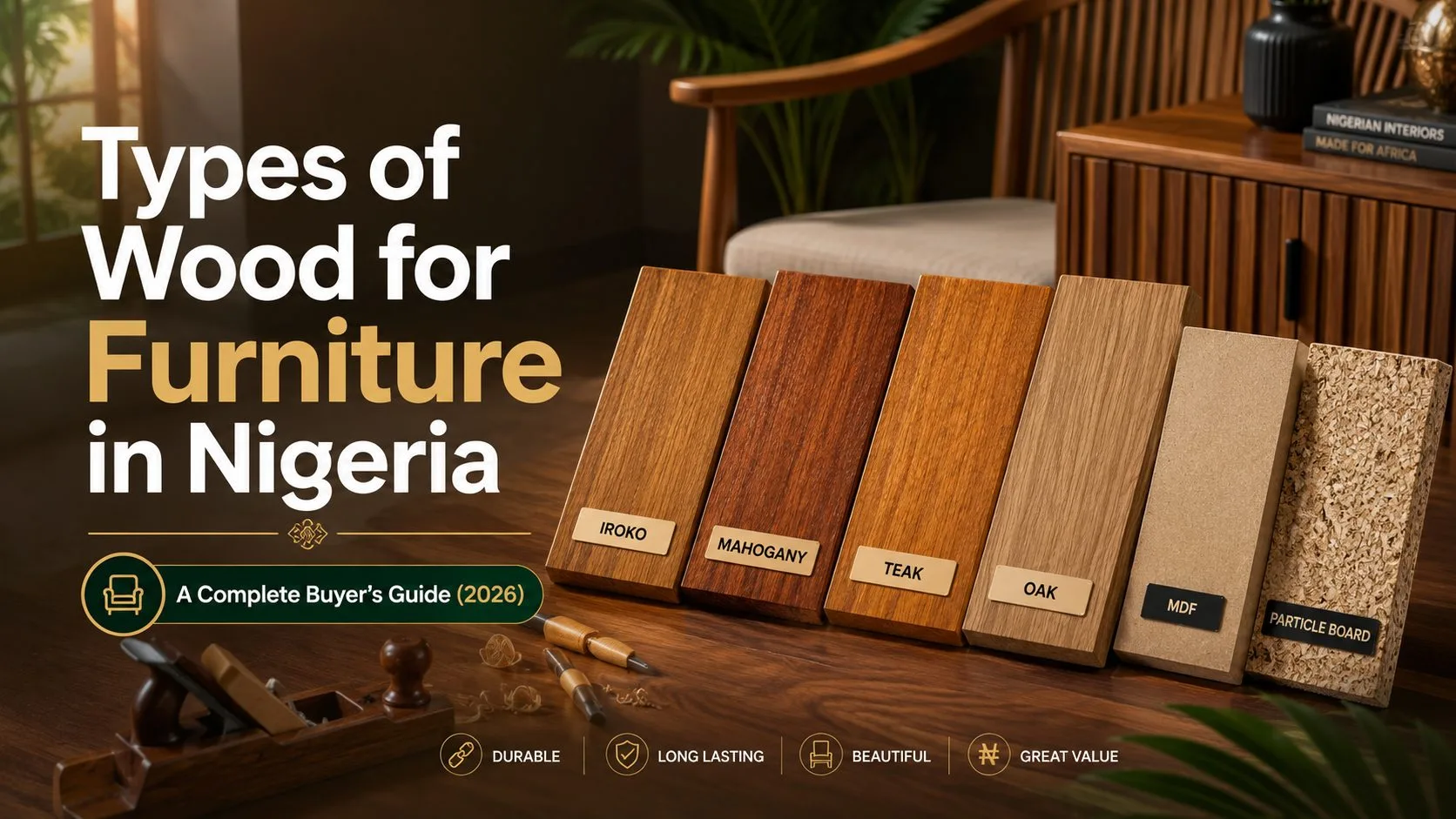
Quick answer: Furniture wood falls into three families — solid hardwoods, softwoods and engineered boards. For furniture in Nigeria, the best choice is a solid, kiln-dried hardwood: iroko, mahogany, teak, oak and acacia are the top performers because they are strong, long-lasting and naturally resistant to the country’s heat, humidity and termites. Softwoods like pine are cheaper but dent easily, while engineered boards range from strong plywood down to cheap particle board that swells and fails in humidity. For daily-use furniture that lasts, choose solid hardwood on a properly-dried frame — the material every quality Vento piece is built from.
The wood a piece of furniture is made from decides almost everything about it — how long it lasts, how it copes with Nigerian humidity and termites, how much it costs, and how it looks and ages. Two sofas or beds that look identical in a showroom can be worlds apart underneath: one built on solid kiln-dried hardwood that lasts fifteen years, the other on cheap particle board that swells and sags within two. This guide explains the types of wood used for furniture in Nigeria — the solid hardwoods, the softwoods and the engineered boards — which suits which purpose, how each handles the Nigerian climate, and how to tell quality wood from a cheap imitation before you buy.
The Three Families of Furniture Wood
Every piece of wooden furniture is made from one of three broad categories, and knowing which is which is the first step to buying well.
Solid hardwood comes from broad-leaved, slow-growing trees — iroko, mahogany, teak, oak, walnut. It is dense, strong, long-lasting and the premium choice for furniture. Softwood comes from faster-growing coniferous trees such as pine; it is lighter, cheaper and easier to work but dents and wears faster. Engineered wood is manufactured board — plywood, MDF, HDF and particle board — made by bonding wood fibres, chips or veneers together; quality varies enormously, from strong, stable plywood down to cheap particle board. The rest of this guide breaks each family down and shows where it belongs.
Solid Hardwoods for Nigerian Furniture
Solid hardwoods are the backbone of quality furniture in Nigeria. These are the species you will see most, from local timbers to premium imports, ranked roughly by how they perform in furniture.
1. Iroko (African Teak)
Often called African teak, iroko is one of the finest furniture woods available in Nigeria. It is dense, golden-brown, extremely durable, and naturally resistant to termites, rot and moisture — which makes it ideal for the Nigerian climate. Iroko is used for high-end tables, beds, wardrobes and outdoor pieces, and it ages into a rich, deep tone. It is a genuinely premium local hardwood.
2. Mahogany (Sapele & Utile)
Mahogany — including the Sapele and Utile varieties common in West Africa — is the classic furniture hardwood: a warm reddish-brown, straight-grained, stable and easy to work into fine detail. It takes a beautiful polish and is the traditional choice for elegant dining sets, beds and cabinetry. Mahogany balances durability, workability and a refined look, which is why it has been prized for furniture for generations.
3. Teak
Teak is one of the densest, most weather-resistant woods in the world. Its natural oils repel water and insects, so it survives humidity, rain and sun better than almost any other wood — making it the premium choice for outdoor and garden furniture as well as high-end indoor pieces. Teak is expensive, but it is close to indestructible when properly finished.
4. Oak
Oak is a hard, heavy, pale-to-golden hardwood with a distinctive grain, widely used for quality furniture worldwide and imported into Nigeria for premium pieces. It is strong, stable and long-lasting, resists knocks well, and suits both modern and traditional designs. Kiln-dried oak is a mainstay of well-built beds, dining tables and wardrobes.
5. Walnut
Walnut is a premium, darker hardwood prized for its rich chocolate-brown colour and smooth grain. It is dimensionally stable, strong and shock-resistant, and it reads as luxurious — the choice for statement dining tables, executive desks and high-end cabinetry where the wood itself is part of the design.
6. Mansonia
Mansonia is a strong, dark Nigerian hardwood used widely in local furniture-making. It is dense and durable with an attractive dark-brown tone, offering much of the look and strength of mahogany. It is a solid, good-value hardwood for beds, chairs and cabinets.
7. Gmelina
Gmelina arborea is the most widely used local furniture timber in Nigeria, largely because it grows fast and is affordable. It is a lighter-coloured, moderately durable hardwood — good value for everyday furniture, though it is softer and less long-lasting than iroko, teak or mahogany. Properly seasoned and treated, it serves well in the budget-to-mid tier.
8. Acacia
Acacia is a dense, hard-wearing hardwood with a distinctive, characterful grain that varies from piece to piece. It is naturally durable and water-resistant, takes a rich finish, and is used for quality tables, beds and cabinets. Its combination of strength, striking grain and value has made it increasingly popular for well-made furniture.
Softwoods for Furniture
Softwoods come from faster-growing trees and sit below hardwoods for furniture use. Pine is the most common — light in colour and weight, affordable, and easy to work, which makes it popular for budget furniture, frames and children’s pieces. The trade-off is that pine is soft: it dents, scratches and shows wear more easily than hardwood, and untreated softwood is more vulnerable to moisture and insects in the Nigerian climate. Softwood has its place at the budget end and for pieces that will not take heavy daily punishment, but for furniture meant to last, a hardwood is the sounder investment.
Engineered Woods Explained
Engineered or manufactured boards are made by bonding wood fibres, chips or thin veneers together. They are not automatically inferior — the best engineered boards are strong and stable — but quality ranges from excellent to disposable, so it pays to know which is which.
Plywood
Plywood is made from thin layers of real wood glued together with the grain alternating, which makes it strong, stable and resistant to warping — often more stable than solid wood across changes in humidity. Good-quality plywood is a legitimate material for wardrobe carcasses, drawer bases and cabinet backs, and it is far better than particle board.
MDF and HDF
MDF (medium-density fibreboard) and the denser HDF are made from fine wood fibres compressed with resin into a smooth, uniform board. MDF takes paint and veneer beautifully, which makes it useful for painted panels, shaped doors and flat surfaces. Its weakness is moisture: if the sealed surface is breached, MDF absorbs water, swells and cannot be repaired — so it belongs in dry, finished applications, not where it will get wet.
Particle Board (Chipboard)
Particle board — also called chipboard — is made from wood chips and sawdust bonded with glue. It is the cheapest board and the weakest: it sags under weight, swells and crumbles when it meets moisture, and does not hold screws well over time. It is common in flat-pack and budget furniture, but in Nigerian humidity it is the material most likely to fail within a couple of years. Avoid it for any furniture you expect to keep.
Veneer
Veneer is a thin layer of real wood bonded over an engineered core. A quality hardwood veneer over a stable plywood or MDF core gives the look of solid wood with good stability and lower cost — a perfectly sound construction used even in premium furniture. The thing to check is what lies beneath the veneer: a hardwood veneer over solid ply is very different from a printed foil over particle board.
Furniture Wood Comparison
This table sums up how the main furniture woods compare on the things that matter — durability, look, climate suitability and typical use in Nigerian homes.
| Wood | Family | Durability | Climate suitability | Best furniture use |
|---|---|---|---|---|
| Iroko | Hardwood | Excellent | Excellent — termite & moisture resistant | Beds, tables, wardrobes, outdoor |
| Teak | Hardwood | Excellent | Excellent — water & insect resistant | Outdoor & premium indoor |
| Mahogany | Hardwood | Very good | Good (needs finishing) | Dining sets, beds, cabinetry |
| Oak | Hardwood | Very good | Good (kiln-dried) | Beds, dining tables, wardrobes |
| Walnut | Hardwood | Very good | Good | Statement tables, executive desks |
| Acacia | Hardwood | Very good | Good — water resistant | Tables, beds, cabinets |
| Gmelina | Hardwood | Moderate | Fair (treat & season) | Budget-to-mid everyday furniture |
| Pine | Softwood | Fair | Fair (treat) | Budget frames, kids’ furniture |
| Plywood | Engineered | Good | Good (sealed) | Cabinet carcasses, drawer bases |
| MDF / HDF | Engineered | Fair | Poor if wet | Painted panels, doors |
| Particle board | Engineered | Poor | Poor — swells in humidity | Avoid for lasting furniture |
Which Wood Is Best for Furniture in Nigeria?
For furniture that lasts in Nigerian homes, the best woods are the durable solid hardwoods — iroko, teak, mahogany, oak and acacia. Iroko and teak lead the field because they are naturally resistant to the termites, humidity and heat that shorten the life of lesser woods, while mahogany, oak and acacia offer an excellent balance of strength, beauty and value. Gmelina is the sensible local choice at the budget end, and quality plywood is a sound engineered option for cabinet interiors. The one rule that matters most is this: whatever the species, it must be properly kiln-dried, because wood that still holds moisture will warp, crack or split as it dries out in a Nigerian home. This is why the pieces at Vento are built on kiln-dried hardwood frames rather than green timber or particle board.
Solid Wood vs Engineered Wood — Which Should You Buy?
The honest answer is that both have a place, and the right choice depends on the piece. Solid hardwood is the material for anything that carries weight, takes daily stress or is meant to last a lifetime — bed frames, dining tables, sofa frames, chairs. It is stronger, repairable (a scratch sands out), and it holds value. Quality engineered board — specifically plywood and hardwood-veneered ply — is a legitimate, stable choice for the parts of furniture that do not take structural load, such as wardrobe carcasses, cabinet backs and drawer bases, and it resists warping well. The material to be wary of is cheap particle board and thin foil-wrapped chipboard, which fail fast in humidity regardless of how good they look new. In short: solid hardwood for the frame and the surfaces you use; quality plywood where stability matters; particle board only for the shortest-term, lowest-budget needs.
Choosing Wood for the Nigerian Climate
Nigeria’s climate is hard on furniture, and the wood has to cope with three things in particular. The first is humidity: high moisture in Lagos, Port Harcourt and coastal areas swells poorly-made board and encourages mould, which is why kiln-dried solid hardwood and sealed plywood outperform particle board so dramatically. The second is termites and wood-boring insects, a real threat to untreated timber — naturally resistant woods like iroko and teak shrug them off, while softer and cheaper woods need proper chemical treatment. The third is the dry harmattan and strong sun, which can dry out and crack under-seasoned wood and fade finishes; a good protective finish and keeping furniture out of constant direct sun prevent this. Choosing a naturally durable, kiln-dried hardwood handles all three at once, which is the single most important reason to buy quality wood in Nigeria.
How to Tell Solid Wood from Engineered Board
In a showroom, a few quick checks separate solid hardwood from engineered board dressed to look like it:
- Weight — solid hardwood is noticeably heavy; if a large piece feels surprisingly light, it is likely engineered board or softwood.
- The grain — on solid wood the grain flows continuously over edges and corners and is never perfectly identical twice; a repeating, printed-looking grain signals a veneer or foil.
- The edges and underside — check unfinished areas; solid wood shows the same grain through the thickness, while chipboard reveals compressed chips and MDF a smooth, pale core.
- Screws and joints — quality solid-wood furniture uses proper joinery and screws that hold; staples and glue-only joints suggest cheap board.
- Price and honesty — genuine solid hardwood is never bargain-cheap; if the price seems too low for “solid wood”, it usually is.
A reputable retailer will tell you exactly what a piece is made from — solid hardwood, hardwood veneer over ply, or engineered board — and that transparency is itself a sign of quality.
Which Wood for Which Furniture
Different pieces have different demands, so the ideal wood varies by furniture type. For bed frames, choose a strong kiln-dried hardwood — iroko, oak, mahogany or acacia — because a bed carries real weight nightly and should last decades. For dining tables and chairs, a solid hardwood top and frame withstands daily use and the odd spilled meal far better than veneered board. Sofa frames should be kiln-dried hardwood hidden beneath the upholstery — the part you cannot see is what determines how long the sofa lasts. For wardrobes and cabinets, a hardwood frame with quality plywood or veneered panels is a sound, stable combination, while an executive office table in solid hardwood or a hardwood-veneer top reads as substantial and lasts through years of daily work.
Caring for Wooden Furniture in Nigeria
Good wood rewards a little care, and Nigeria’s conditions make that care worthwhile. Keep wooden furniture out of constant, direct sunlight, which fades finishes and dries out the wood over time, and position pieces with a little air circulation rather than pressed hard against a damp exterior wall. Wipe surfaces with a soft, dry or slightly damp cloth rather than harsh chemical cleaners, use coasters and mats to protect finishes from hot or wet items, and deal with spills quickly before they mark the surface. Every year or two, a suitable wood polish or oil on solid pieces keeps the finish healthy, and tightening any loosened bolts keeps frames stable. Cared for this way, quality solid-wood furniture lasts for decades and often improves with age.
Where to Buy Quality Solid-Wood Furniture in Nigeria
Knowing the wood is only useful if you can trust what you are buying. Vento Furniture builds its pieces on kiln-dried hardwood frames rather than green timber or cheap particle board, so the sofas, beds, dining sets, wardrobes and office furniture are made to survive the Nigerian climate for years. You can see and compare the quality in person across ten showrooms in Lagos, Abuja, Port Harcourt and Kaduna, where you can feel the weight of a solid frame and inspect the finish before you commit. Browse the full range online, plan a whole room with our guide to furnishing a Nigerian home, and visit your nearest Vento showroom for delivery and installation nationwide.
Frequently Asked Questions
Which type of wood is best for furniture in Nigeria?
The best woods for furniture in Nigeria are durable solid hardwoods — iroko, teak, mahogany, oak and acacia. Iroko and teak lead because they naturally resist termites, humidity and heat, while mahogany, oak and acacia balance strength, beauty and value. Whatever the species, it should be kiln-dried so it does not warp or crack.
What type of wood is commonly used for furniture in Nigeria?
The most commonly used furniture woods in Nigeria are the local hardwoods — Gmelina (the most widely used and affordable), mahogany, iroko, mansonia and afzelia — along with imported oak and walnut for premium pieces, and teak for outdoor furniture. Engineered boards like plywood and MDF are used for panels and cabinet interiors.
What is the strongest wood for furniture?
Among furniture woods, teak and iroko are the strongest and most durable available in Nigeria, thanks to their density and natural oils that resist water and insects. Oak, walnut and acacia are also very strong hardwoods. These outlast softwoods like pine and engineered boards such as particle board by many years.
Is iroko wood good for furniture?
Yes — iroko is one of the best furniture woods available in Nigeria. Often called African teak, it is dense, durable and naturally resistant to termites, rot and moisture, which makes it ideal for the Nigerian climate. It is used for premium beds, tables, wardrobes and outdoor furniture and ages into a rich golden-brown.
What is the difference between solid wood and MDF?
Solid wood is natural timber cut from a tree — strong, repairable and long-lasting. MDF is an engineered board of compressed wood fibres, smooth and good for painted or veneered panels but weak against moisture, which makes it swell and fail if it gets wet. Solid wood is better for structural, load-bearing furniture; MDF suits dry, finished panels.
Is particle board furniture durable in Nigeria?
No — particle board (chipboard) is the least durable furniture material and the most likely to fail in Nigerian humidity. It sags under weight, swells and crumbles when it meets moisture, and does not hold screws well over time. For furniture you want to keep, choose solid hardwood or quality plywood instead.
Is engineered wood better than solid wood?
Neither is universally better — it depends on the use. Solid hardwood is stronger and longer-lasting for load-bearing furniture like beds, tables and sofa frames. Quality plywood is stable and well-suited to cabinet carcasses and drawer bases. The material to avoid is cheap particle board, which fails fast in humidity regardless of how it looks new.
What is the best wood for a bed frame in Nigeria?
The best wood for a bed frame in Nigeria is a strong, kiln-dried hardwood such as iroko, oak, mahogany or acacia, because a bed carries weight every night and should last for decades. Avoid particle board and untreated softwood for bed frames, as they loosen, sag and fail far sooner.
How can I tell if furniture is solid wood or veneer?
Check the weight (solid hardwood is heavy), the grain (solid wood flows continuously over edges and is never perfectly repeated), and the unfinished edges and underside (chipboard shows compressed chips, MDF a smooth pale core). Genuine solid wood is never bargain-cheap, and a good retailer will tell you exactly what a piece is made from.
Where can I buy solid-wood furniture in Nigeria?
You can buy quality solid hardwood furniture — sofas, beds, dining sets, wardrobes and office pieces built on kiln-dried hardwood frames — from Vento Furniture, both online and across ten showrooms in Lagos, Abuja, Port Harcourt and Kaduna, with delivery and installation nationwide.