

Blog
Center Table Price Guide for Nigerian Living Rooms (2026)
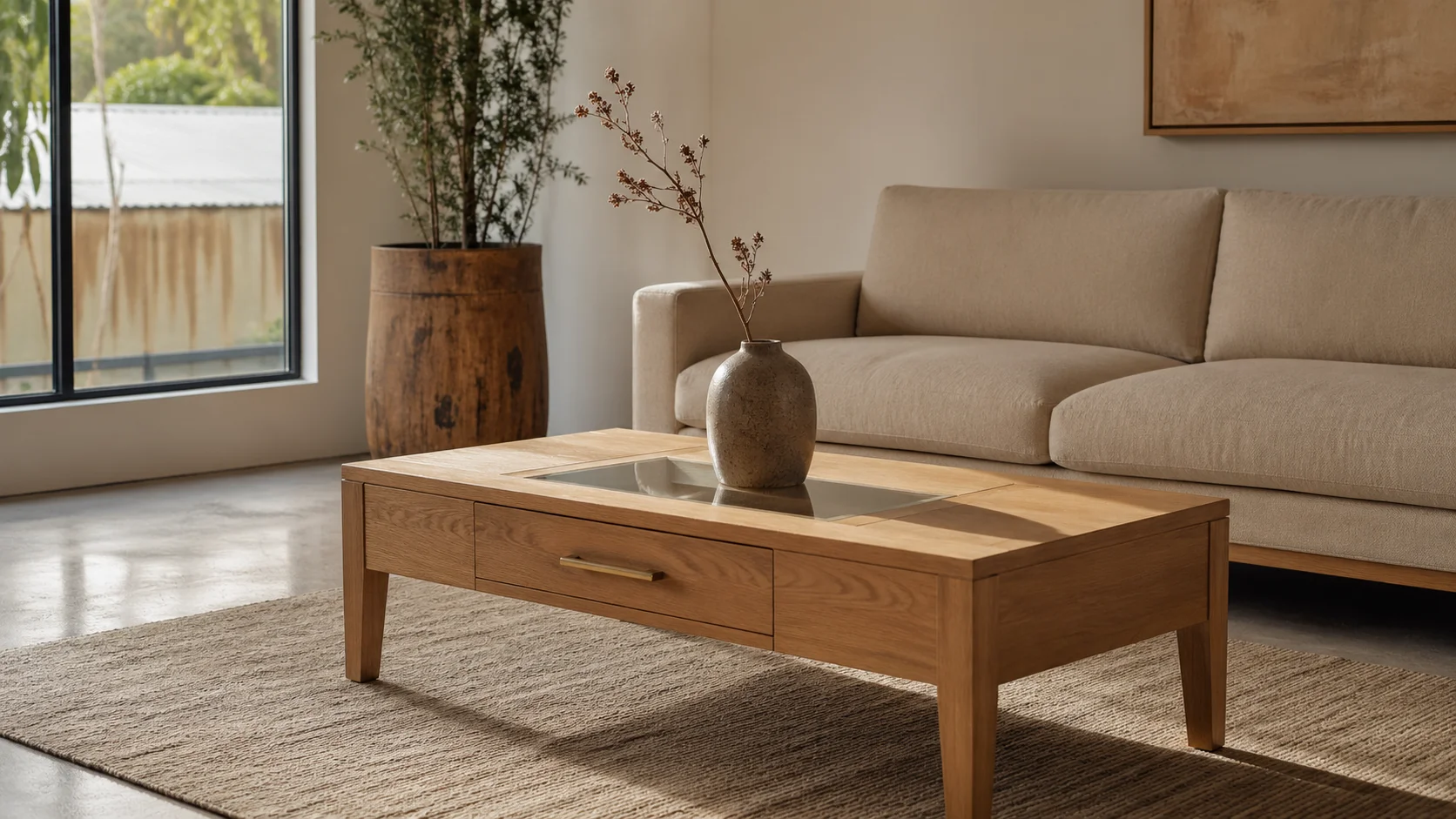
A quality center table in Nigeria costs ₦80,000 to ₦180,000 for budget builds, ₦180,000 to ₦400,000 for mid-range solid wood or marble-top, and ₦400,000 to ₦800,000 for premium designer pieces in 2026. The right tier depends on the sofa, room scale, and use frequency.
A center table sits at the geometric and visual middle of every Nigerian living room, and the price spread across the category is wider than most buyers expect — the same coffee-and-conversation function can be served by a ₦95,000 wood-and-glass starter or a ₦750,000 solid hardwood-and-marble statement table, and both can be the right answer depending on the sofa, the room, and how the room actually gets used. This 2026 price guide walks through the four cost drivers, the material decision framework, the sizing rules that actually fit Nigerian living rooms, and a current price snapshot from Lagos, Abuja, and Port Harcourt showrooms.
Quick Summary
- Budget wood-and-glass: ₦80,000–₦180,000 for a 700–1000 mm round or compact rectangular table
- Mid-range solid wood or wood-and-glass: ₦180,000–₦400,000
- Premium marble, walnut, or designer: ₦400,000–₦800,000
- Best for compact apartments: round 700–800 mm, low-profile
- Best for family living rooms: rectangular 1100–1400 mm with shelf or drawer storage
What Drives Center Table Cost in Nigeria
Center table pricing in Nigeria is built from four inputs, and like the wider furniture category the inputs interact — choosing a marble top on a particleboard frame produces a table that looks expensive on day one and fails within two years. Reading all four together is what separates a fair quote from a fair-looking quote. The four inputs in order of cost-impact are top material, base or frame substrate, joinery and finish quality, and design complexity, and the relative weight of each shifts depending on whether you are pricing a 700 mm round occasional table or a 1400 mm rectangular family-room piece. At Vento Furniture our living-room consultations almost always start at the center table because the table anchors the sofa, rug, and side-table choices that come after it.
Top material
Top material accounts for the largest single visible cost variation. Tempered glass tops are the cheapest and most common entry — a 10 mm clear or smoked tempered glass insert adds roughly ₦25,000–₦60,000 to a wood frame. Solid hardwood tops in iroko, oak, mahogany, or walnut run two to four times that figure depending on plank width and grain quality. Marble tops are the highest tier — imported Carrara, Calacatta, or local Cross River marble adds ₦220,000–₦650,000 to a comparable base depending on slab thickness and edge treatment. The top alone can swing a 1200 mm table from ₦95,000 (tempered glass on MDF base) to ₦680,000 (marble on solid wood base).
Base or frame substrate
The base is the structural element that determines whether the table will still be square after five years of daily use. A solid hardwood base built from kiln-dried iroko or oak typically costs 80–120 per cent more than the equivalent in plywood-and-veneer, which in turn costs 40–60 per cent more than particleboard. Steel and brushed brass bases sit between mid-range hardwood and premium walnut depending on gauge, weld quality, and finishing — a powder-coated 12 mm steel base on a 1200 mm table adds ₦80,000–₦180,000 over a comparable wooden base. Avoid bases described only as “wood” without species or substrate detail; the description gap is almost always concealing particleboard.
Joinery and finish quality
Two tables with identical material specs and dimensions can quote 40–80 per cent apart based on joinery and finish quality. Mortise-and-tenon joints, dovetailed drawer construction, and proper edge banding on veneer tops add carpentry hours that show up in price but not in the photograph. Sprayed lacquer, hand-rubbed oil, or matte two-component finishes outlast wipe-on stain by years — and the price premium is usually ₦25,000–₦70,000 for the upgrade. Inspect the underside of any showroom table before quoting comparison: edge bands, screw quality, and joint type are all visible there.
Design complexity and storage
A plain four-leg table with a single top is a basic build. Add a lower shelf, a drawer with soft-close runners, or a dual-tier nesting design and the carpentry labour, hardware cost, and assembly time scale up by 30–80 per cent. Storage features are worth the cost premium for family living rooms where the table holds remote controls, magazines, and children’s items daily; for formal-only sitting rooms the plain top often looks better and costs less.
Choosing the Right Center Table — The Decision Framework
The honest answer to “which center table” depends on three things: how the living room actually gets used during the week, how much floor space surrounds the sofa once the table is in place, and which material aesthetic anchors the rest of the room’s furniture. The framework below is structured around use case (formal versus daily-use versus family) because that single dimension changes the material and storage choice more than any other. Walk through the three cases below in order — they cover roughly 85 per cent of Nigerian household center table purchases.
Daily-use family living room
A daily-use family room benefits from a rectangular table 1100–1400 mm wide with a lower shelf or single drawer for daily clutter. Solid wood or wood-and-glass construction handles the daily wipe-down and occasional spill better than marble (which stains from coffee and palm oil) or pure glass (which shows every fingerprint within hours). Mid-range build at ₦180,000–₦380,000 is the sweet spot — durable enough for a decade of family life, affordable enough that a child-induced scratch is not a household crisis. Vento Furniture’s living-room range carries center tables in this band that pair with our sofa sets collection, which is the most common combined purchase from family-room consultations.
Formal sitting room
A formal-only sitting room — used for guests, weekend visits, and special occasions — supports premium materials that would not survive a daily-use room. Marble tops, polished walnut, or designer pieces in the ₦400,000–₦800,000 band make sense here because the use frequency is low enough that wear concerns disappear. The design conversation in formal rooms shifts from durability to visual statement; a 1200 mm round Carrara marble table on a brushed brass base anchors the room in a way no functional piece can. Pair the formal table with the rest of a coordinated suite rather than buying piece-by-piece — the visual cohesion matters more than the individual quality of each piece in a formal context.
Compact apartment living room
A compact apartment living room under 16 square metres needs a center table that does not crowd circulation. A round 700–800 mm table with a low-profile (under 400 mm tall) profile keeps the room visually open and gives walking room around the sofa. Avoid rectangular tables wider than 1000 mm in this size of room — the table will dominate the floor plan and force furniture against walls in ways that make the room feel smaller than it is. Mid-range build at ₦120,000–₦280,000 covers this case well. Apartment buyers who want the table to also serve as a casual dining surface for two should consider a slightly taller (450–500 mm) profile that pairs comfortably with a low-back sofa edge.
Sizing Center Tables to Nigerian Living Rooms
Three sofa-and-room combinations cover roughly 80 per cent of the living rooms Nigerian buyers actually furnish. The center table sizing that fits each is non-obvious until you measure with the sofa already in position. The geometry that matters is sofa-to-table clearance (for legs while seated), table-to-TV-stand clearance (for walking past), and the table footprint relative to the rug underneath, which collectively determine whether the table feels grounded or stranded in the room.
Two-seater sofa configuration
A two-seater sofa (typically 1500–1700 mm wide) pairs best with a center table 800–1000 mm wide and roughly two-thirds the sofa width. A round 750 mm or rectangular 900 mm table in front of a 1600 mm two-seater leaves comfortable leg clearance (350–450 mm between sofa edge and table edge) and visually balances the seating. Plan ₦150,000–₦280,000 for a mid-range build at this size. This is the most common configuration in two-bedroom Lagos apartments and starter-home living rooms.
Three-seater sofa configuration
A three-seater sofa (typically 2000–2300 mm wide) needs a center table 1100–1400 mm wide to look proportional. Going smaller produces a stranded-table look; going larger crowds the leg clearance. Rectangular tables work better than round at this size because they parallel the sofa line. Plan ₦180,000–₦400,000 for a mid-range build. This is the default configuration in three-bedroom apartments and most family rooms in Nigerian houses.
Sofa-and-loveseat L configuration
An L-shape with a three-seater plus a loveseat or chaise needs a center table 1200–1500 mm in the longer dimension and 700–900 mm in the shorter, ideally with a slightly larger overall footprint than a single-sofa room because two seating axes converge on it. Square tables work as well as rectangular at this size. Plan ₦280,000–₦500,000 for mid-range, ₦600,000–₦800,000 for premium statement pieces. This configuration is increasingly common in Lekki, Ikoyi, and Wuse 2 apartments where open-plan living rooms accommodate sectional seating.
2026 Price Snapshot — Lagos, Abuja, Port Harcourt
The prices below are 2026 ranges from established Lagos and Abuja showrooms and respected custom workshops. Currency volatility and import-cost shifts move these bands quarter-to-quarter, so treat the figures as orientation rather than firm quotes.
| Center Table Type | Budget Build | Mid-Range Build | Premium Build |
|---|---|---|---|
| Round 700–800 mm wood and glass | ₦80,000–₦150,000 | ₦150,000–₦280,000 | ₦300,000–₦450,000 |
| Round 900–1000 mm solid wood | ₦100,000–₦180,000 | ₦200,000–₦380,000 | ₦400,000–₦600,000 |
| Rectangular 1000–1200 mm wood and glass | ₦100,000–₦180,000 | ₦200,000–₦380,000 | ₦400,000–₦650,000 |
| Rectangular 1200–1400 mm solid wood with drawer | ₦150,000–₦280,000 | ₦300,000–₦450,000 | ₦500,000–₦800,000 |
| Marble or designer top within Vento collection | ₦200,000–₦300,000 | ₦350,000–₦550,000 | ₦600,000–₦800,000 |
Budget = entry wood-and-glass build, generic hardware, basic sprayed finish. Mid-range = plywood or solid wood base, tempered glass or hardwood top, Hettich or equivalent hardware where applicable, sprayed lacquer or oiled finish. Premium = solid hardwood, marble, or hand-finished designer pieces with imported hardware. Vento Furniture’s Lagos and Abuja showrooms carry center tables across this ₦80,000 to ₦800,000 band — the showroom display is the most reliable way to compare materials and joinery before committing to a quote.
Where to Buy and What to Verify Before Signing
Where you buy matters less than what you verify before signing. Three checks separate quotes that will deliver from quotes that will disappoint.
Verify the substrate behind the finish. Ask the showroom or carpenter to specify “solid iroko top, plywood apron” or “tempered glass on solid oak base” or whatever the actual construction is, and have it written into the quote. Verbal “premium hardwood” claims mean nothing; the written specification is what you can hold the supplier to if a substrate substitution shows up at delivery. Tap the underside of any wood table on the showroom floor — solid wood thuds, particleboard sounds hollow.
Verify the top thickness. Glass tops thinner than 10 mm crack from impact and thermal stress within two years; demand 12 mm tempered minimum for any glass surface that will see daily use. Marble slabs thinner than 18 mm crack at the edges within five years; demand 20 mm minimum. Solid wood tops thinner than 25 mm warp; demand 30 mm minimum on any top wider than 1000 mm.
Verify delivery, assembly, and after-sales. “Delivered” can mean “dropped at your front door”. Ask explicitly whether assembly is included (tables with separate top and base often ship that way), whether the delivery team will level the piece in your room, and what the after-sales warranty covers — most reputable Nigerian retailers cover joinery defects for 12–24 months, but glass and marble breakage are usually customer responsibility. For the broader living-room build that follows the center table choice, Vento Furniture’s accessories range covers the side tables, lamps, and decor pieces that finish the room without requiring a separate showroom visit.
For a wider view of where to shop in Lagos for living-room furniture coordination after the center table decision is made, see our Lagos furniture stores guide, which maps the city’s retail clusters by district and price tier.
What Most Buyers Get Wrong on the First Center Table Purchase
Three patterns account for the majority of regret cases we hear about during second-time living-room consultations. The first is over-sizing the table relative to the sofa and the room — buyers see a beautiful 1500 mm rectangular table in the showroom (where it sits in front of a deliberately oversized display sofa) and bring it home to a 1700 mm two-seater, where it crowds the seating and breaks the room proportions. The second is choosing a glass top for a daily-use family room without thinking about fingerprints, which produces a table that requires daily wiping to look acceptable and looks visibly used within an hour of any visitor. The third is matching the center table aesthetic to the showroom display rather than to the actual sofa and rug already in the home — bring a sofa cushion fabric sample and a rug photo to the showroom rather than choosing in isolation.
Building the Living Room Around the Center Table Decision
The center table sits at the visual centre of the living room and its material and silhouette anchor every other piece in the room — the side tables, the TV stand, the bookshelf, even the rug pile colour. Once the table is chosen, the rest of the room narrows substantially: a glass-and-brass center table pairs awkwardly with heavy carved-wood side tables, and a marble center table dominates a room with a budget particleboard TV unit. The Vento Furniture living-room consultations typically walk through the center table first and test sofa, side table, and TV unit options against that anchor, which produces noticeably better-coordinated rooms than the reverse sequence.
For the matched sofa-and-side-table step that follows the center table decision, our sofa sets range carries coordinated suites across modern, transitional, and traditional aesthetic bands that pair cleanly with each of the price-tier center tables above. To compare format options across the full center tables collection, or to see the broader visual treatment context, our Nigerian living room design ideas 2026 overview shows how center tables anchor different room layouts. Sequencing the center table order first and the sofa within two to three weeks afterward keeps the colour-and-style conversation continuous and avoids the most common mid-furnishing regret of mismatched tones.
Frequently Asked Questions
How much should a standard center table cost in Nigeria in 2026?
A 1200 mm rectangular center table in mid-range plywood-and-glass or solid wood construction should quote ₦180,000 to ₦380,000 from a reputable Lagos or Abuja showroom in 2026. Quotes substantially below ₦150,000 at this size are usually using particleboard or thin (8 mm) glass; quotes substantially above ₦500,000 are typically pricing in solid walnut, marble, or designer imported pieces. The mid-range band gives the best longevity-for-money trade for daily family-room use and pairs well with most three-seater sofa configurations.
Is a glass top or solid wood better for a Nigerian living room?
Solid wood wins for daily-use family rooms because it hides fingerprints, tolerates spills with a quick wipe, and ages gracefully even with minor scratches. Glass wins for compact apartments because the visual transparency keeps the room feeling open and reflects light across smaller floor plans. The trade-off: glass needs daily wiping to look acceptable in a room with regular use, and 10 mm glass cracks from impact within two years. For most Nigerian households we recommend solid wood or wood-with-glass-insert for family rooms and pure glass only for formal sitting rooms or compact apartments under 16 square metres.
What size center table fits a three-seater sofa?
A three-seater sofa of 2000–2300 mm width pairs proportionally with a rectangular center table 1100–1400 mm wide and 600–700 mm deep. Going smaller than 1100 mm produces a stranded-looking table that breaks the visual line of the seating; going larger than 1400 mm crowds the leg clearance between sofa edge and table edge, which should stay in the 350–450 mm range for comfortable seated use. Round tables work less well at this scale because they create awkward dead corners between the round footprint and the rectangular sofa line.
Are marble center tables practical for Nigerian living rooms?
Marble is practical only for formal-only sitting rooms that see weekly rather than daily use. Marble stains from coffee, palm oil, red wine, and any acidic spill if not wiped within minutes; the staining is permanent and the only remediation is professional polishing at ₦80,000–₦180,000 per visit. For daily-use family rooms, the maintenance burden defeats the aesthetic benefit within twelve months. For formal rooms with low use frequency, marble at the ₦450,000–₦800,000 tier delivers visual impact no other material matches and ages beautifully across decades.
Where can I find quality custom center tables in Abuja?
Abuja’s Wuse 2 and Jabi corridors carry the deepest concentration of mid-premium contemporary furniture showrooms with strong center table selections, anchored around Adetokunbo Ademola Crescent in Wuse 2 (where the Vento Wuse 2 showroom in Kokkies Mall sits) and the Jabi Lake Mall cluster. Maitama and Asokoro host the premium import-and-custom hybrid tier for buyers spending above ₦600,000 per table. Karu and Kubwa cover the budget custom carpentry segment — variable quality, excellent value when you find a workshop with strong joinery. The most reliable filter: ask to see two or three completed center tables in client homes before signing, and inspect joinery on the underside of the showroom display.
How long should a quality center table last in a Nigerian home?
A mid-range solid wood or wood-and-glass center table at the ₦180,000–₦450,000 band should last ten to fifteen years in normal Nigerian living-room use — daily wiping, occasional spills, moderate impact from feet and dropped objects. Premium solid hardwood tables at the ₦500,000+ band typically deliver fifteen-plus years and often gain visual character through wear. Particleboard or low-grade MDF tables at the budget tier (under ₦100,000) typically fail within three to five years from edge swelling, joint loosening, or veneer delamination, particularly in coastal Lagos and Port Harcourt where humidity accelerates the failure mode.
What is the difference between a center table and a coffee table?
In Nigerian usage the two terms are used interchangeably for the low table positioned in front of the sofa in a living or sitting room. International furniture taxonomy distinguishes them slightly — a “coffee table” in Western usage typically describes a lower (350–420 mm) table designed for casual coffee-and-magazines use, while a “center table” describes the same piece in its room-anchoring role. In practice, Lagos and Abuja showrooms label the same product both ways and the two terms produce the same search results. Buy by use case (formal versus daily, two-seater versus three-seater) rather than by terminology.
Should I match the center table to my dining table or sofa?
Match the center table to the sofa and rug, not the dining table. The center table sits in the same visual frame as the sofa for daily use; the dining table is in a different room or zone and follows a separate aesthetic conversation. Try to align material family (wood with wood, glass-and-metal with glass-and-metal) and finish tone (warm with warm, cool with cool) between center table and sofa frame. Exact matching is unnecessary and often looks too coordinated; complementary tones with one shared material element (legs, top, or trim) produces the most natural-looking room.
Can a center table double as storage for a small living room?
Yes, and it is one of the highest-value upgrades for compact apartments. A center table with a single drawer adds capacity for remote controls, charger cables, and small items that otherwise scatter across the table top; a lift-top design adds laptop or magazine storage and can convert to a casual dining or work surface. Lower-shelf storage adds visible space for books, baskets, or a folded throw. The cost premium for storage features is ₦40,000–₦150,000 over a plain top of the same external dimensions, which pays back quickly in floor space saved on a separate storage piece.
What height should a center table be relative to the sofa?
The center table top should sit 30–50 mm below the sofa seat cushion height, which puts the table at the comfortable height for setting down a drink, reaching for a remote, or resting a book without leaning forward awkwardly. Standard Nigerian sofas have seat heights of 420–460 mm, which makes center table heights of 380–420 mm the right band for most rooms. Lower (350 mm) profiles work for low-back modern sofas and Asian-influenced living rooms; higher (450–500 mm) profiles work when the table will double as a casual dining surface, but the leg clearance against the sofa edge becomes tighter and circulation around the table feels more cramped.