

Blog
Types of Furniture: A Guide for Nigerian Homes (2026)

The main types of furniture are seating, tables, beds, storage and outdoor pieces, grouped by what they help you do: sit, eat, work, sleep or keep things. Inside each group sit many designs, from sofa sets and center tables to wardrobes and bunk beds, plus traditional Nigerian forms such as carved stools.
This guide walks through every major furniture category in the order most Nigerian homes buy them, starting with the sitting room. Each section explains what the type is for, the common designs you will meet in Lagos, Abuja or Port Harcourt showrooms, and what to check before you commit. Later sections cover traditional Nigerian furniture, the rise of modern furniture designs in Nigeria, and a room-by-room table you can use as a checklist.
Furniture Categories: The Five Main Groups
Furniture is any movable or fitted object that supports daily activity. Designers, retailers and dictionaries usually sort it by function, because function decides size, height and material. Using that logic, almost every piece you will find in a Nigerian home falls into one of five furniture categories:
- Seating – sofas, armchairs, dining chairs, office chairs, stools and poufs.
- Tables and surfaces – center tables, side stools, dining tables, console tables and desks.
- Sleeping furniture – beds, bunk beds, daybeds and the bedside pieces that go with them.
- Storage and display – wardrobes, dressers, TV stands, bookshelves, sideboards and cabinets.
- Outdoor and special-purpose furniture – patio sets, swings, children’s furniture and office suites.
Some lists split these further, for example by separating entertainment furniture from storage or treating children’s furniture as its own category. The five groups above are enough to plan a whole house, and the sections below go through each one in detail.
Free-standing, built-in and upholstered furniture
A second way to classify furniture is by how it is made and placed. Free-standing furniture, such as a sofa or a dining set, sits on the floor and can be moved when you rearrange or relocate. Built-in or fitted furniture, such as kitchen cabinets and some wardrobes, is fixed to the wall or floor and becomes part of the building. Upholstered furniture is any frame covered with padding and fabric or leather, which includes most sofas, armchairs and many headboards. Tenants in rented flats usually prefer free-standing pieces, while homeowners can invest in fitted storage that uses every centimetre of wall space.
Furniture classified by material
Material is the third common classification. Solid wood furniture is valued for strength and repairability, engineered boards such as MDF and plywood keep cabinet prices and weight down, metal frames suit modern and outdoor designs, and glass or stone tops are used on tables and consoles. In Nigeria the climate matters: humid coastal air in Lagos and Port Harcourt and the dry harmattan wind in the north both test timber, so the species and the finish deserve as much attention as the shape. Our guide to the types of wood for furniture compares iroko, mahogany, teak, obeche and imported hardwoods in detail.
Types of Sofas
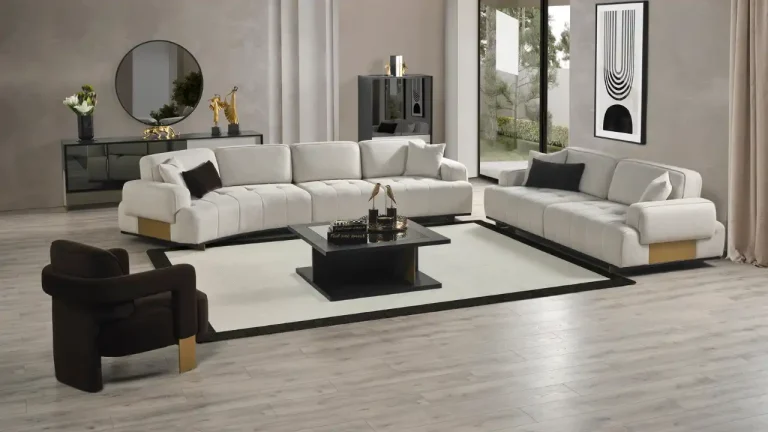
The sofa is the anchor of the Nigerian sitting room, and many people simply call it “the chair”. Sofas are sold either as single pieces or as matched sets, and the configuration you choose depends on room size, how many people you host and whether you want a formal or relaxed layout.
Sofa sets (3-seater, 2-seater and armchairs)
A sofa set combines several matching pieces, usually described by seat count, such as 3-2-1-1 or 4-3-1-1. The large sofas face the television or the main wall, while the single armchairs close the seating area and give guests their own seat. Sets are popular in Nigeria because they make a parlour look complete from day one and keep the colour and fabric consistent. When comparing sofa sets, check seat depth, cushion density, frame material and whether the fabric is easy to clean in a dusty season.

Corner and L-shaped sofas
A corner sofa, also called an L-shaped or sectional sofa, joins two runs of seating at a right angle. It seats more people along the same wall length and works well in open-plan flats where the sofa also divides the sitting area from the dining space. Many sectional designs are modular, so a corner unit, a pouf and single seats can be rearranged. Measure both walls and leave at least 80 cm of walkway before choosing one.
Loveseats, sleeper sofas and chaise sofas
A loveseat is a two-seater sofa that suits bedrooms, small flats and reading corners. A sleeper sofa hides a fold-out mattress and doubles as a guest bed, which is useful in homes that host relatives for long visits. A chaise sofa adds an extended seat for stretching your legs. These smaller sofa types often complement a main set rather than replace it, and they work well in a family lounge upstairs.
Types of Chairs
Chairs are the most varied furniture type because they serve every room. They differ by back height, arms, padding and base, and each design is built around a particular posture, whether that is upright for eating, reclined for relaxing or adjustable for long hours of work.
Armchairs, accent chairs and recliners
An armchair is a single upholstered seat with arm rests, usually sold as part of a sofa set. An accent chair is a standalone design with a striking shape or fabric that adds colour to a corner. A recliner tilts back with a lever or motor and is popular in family rooms for watching football. Swivel chairs, wingback chairs and lounge chairs are other variations of the same comfortable single-seat idea.
Dining chairs
Dining chairs are lighter and more upright than living room chairs so that you can sit close to the table. Common types include side chairs without arms, carver chairs with arms at the head of the table, upholstered chairs with fabric or leather seats, and benches that seat two or three children. Seat height should sit about 25 to 30 cm below the tabletop. Upholstered seats are comfortable but need a fabric that wipes clean after jollof and stew.
Office chairs
Office chairs are built for long sitting. Task chairs have mesh backs, adjustable height and lumbar support, while executive or manager chairs add a high padded back, thicker cushions and leather or leather-look upholstery. Visitor chairs are simpler fixed-base seats placed in front of a desk. Anyone working from home for several hours a day should treat an adjustable chair as a necessity rather than an extra.
Stools, poufs and benches
Stools have no back and come as bar stools, low footstools and decorative side stools. Poufs, sometimes spelled pouffes, are padded cylinders or cubes that work as extra seats or footrests; the leather pouf has deep roots in northern Nigerian craft. Benches seat several people along a dining table, at the foot of a bed or in an entrance. These small seats are the easiest way to add flexible seating for parties without crowding the room.
Types of Tables
Tables are the second-largest furniture category. Their height tells you their job: low tables sit beside seating, standard-height tables are for eating and working, and tall narrow tables line walls and entrances. Choosing the correct type for each spot keeps a room usable as well as attractive.
Center tables (coffee tables)
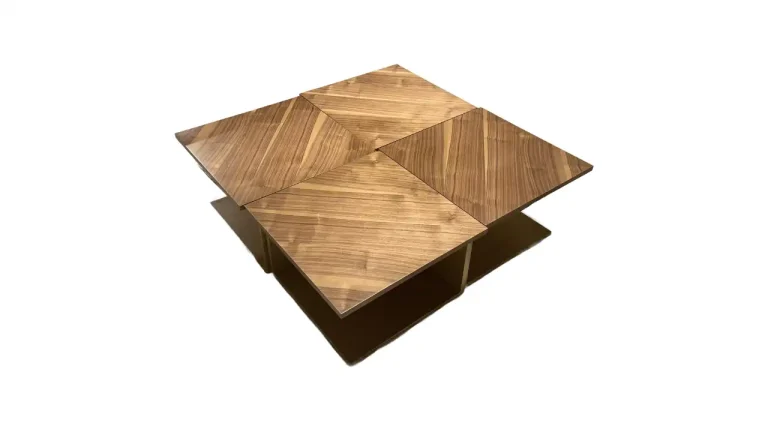
A center table, called a coffee table in many countries, sits in front of the sofa to hold drinks, remotes and decor. Nigerian homes favour generous center tables because guests are often served in the sitting room. Popular designs include solid wood tops, marble tops, glass tops on metal frames and split or nesting tables that can be pulled apart. Browse the full range of center tables to compare shapes, and keep the table about two-thirds the length of your sofa.
Side stools and nesting tables
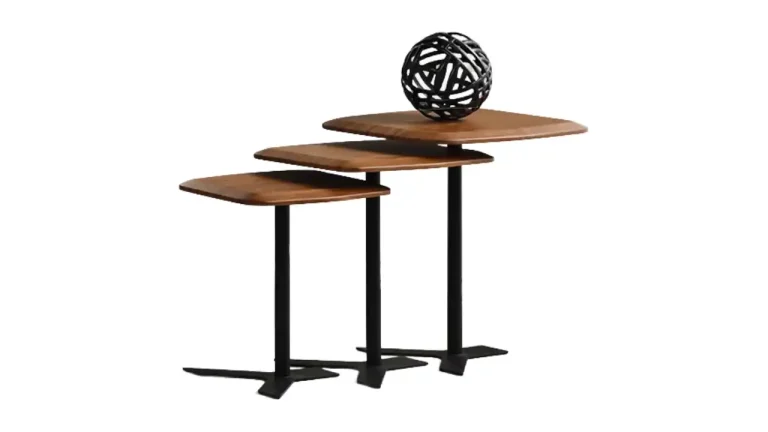
Side stools are small tables placed at the end of a sofa or beside an armchair, giving each seat a surface for a cup or a lamp. Nesting tables are sets of two or three tables of different sizes that slide under one another, so you can spread them out for guests and tuck them away afterwards. They suit flats where floor space is precious.
Dining tables
Dining tables come in rectangular, round, oval and square shapes, usually with four, six or eight seats. Rectangular tables suit long rooms, round tables encourage conversation in square spaces, and extendable tables help families who host large gatherings at Christmas or Sallah. Most Nigerian buyers choose complete dining room sets that include matching chairs and sometimes a console or sideboard. Our dining room sets show how a table, chairs and storage can be coordinated.

Console tables and desks
A console table is a narrow, tall table that stands against a wall, behind a sofa or in an entrance hall to hold keys, lamps and decorative pieces. A desk is a working table, from a compact writing desk in a bedroom to a full executive desk with drawers and a side return. Dressing tables, which combine a narrow table with a mirror and drawers, belong to the same family and usually sit in the bedroom.
Types of Beds and Bedroom Furniture
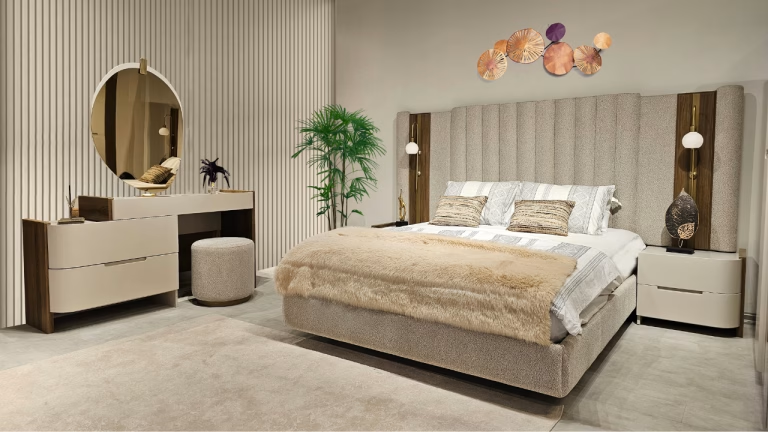
The bed is the most important item in the bedroom, but a complete bedroom also needs storage and bedside surfaces. Furniture makers increasingly sell these pieces as coordinated bedroom sets, which keep finishes and handles consistent across the whole room.
Common bed types
A platform bed has a low, solid base that supports the mattress without a box spring. An upholstered bed wraps the frame and headboard in fabric or leather for a soft, hotel-style look. Storage beds lift up or include drawers, which is useful in small rooms. Canopy and four-poster beds create a dramatic master suite, while bunk beds and loft beds save space in children’s rooms. Many shoppers pick complete bedroom sets that pair the bed base with nightstands, a dresser and a mirror.
Wardrobes, dressers and nightstands
Wardrobes hold hanging clothes and come as hinged-door, sliding-door, walk-in or fitted designs. Dressers and chests of drawers store folded clothing, and a dresser with a mirror doubles as a dressing table. Nightstands, also called bedside tables or commodes, keep a lamp, phone and glass of water within reach. For styles, finishes and sizing advice, see our guide to wardrobe designs in nigeria, which covers both free-standing and fitted options.
Children’s and young room furniture
Children’s furniture is scaled to smaller bodies and changing needs. Typical pieces include cribs for babies, single beds, bunk beds for siblings, study desks, low bookshelves and toy storage. Young room sets bundle a bed, wardrobe and study unit in one coordinated design. Rounded edges, stable bases and washable surfaces matter more here than in any other room.

Storage and Entertainment Furniture
Storage furniture keeps a home organised and hides daily clutter. Entertainment furniture is a specialised branch of storage built around the television and media devices. Both categories have grown in importance as Nigerian homes add larger screens, gaming consoles and home offices.
TV stands and TV consoles
A TV stand is a low cabinet that supports the television and stores decoders, routers and remotes. TV consoles and wall units add shelves, closed cabinets and sometimes a back panel that frames the screen. Choose a stand that is wider than the television, with cable openings at the back and ventilation for the decoder. For layout ideas and the latest styles, read our guide to tv console designs.

Bookshelves, cabinets and sideboards
Bookshelves and display units show books, awards and decor on open shelves. Cabinets close storage behind doors, and sideboards, also called buffets or consoles, sit in the dining room to hold plates, glassware and serving dishes. In the kitchen, base and wall cabinets are the main storage furniture; our kitchen cabinet buying guide explains layouts, board materials and finishes that survive steam and heat.
Entrance and hallway furniture
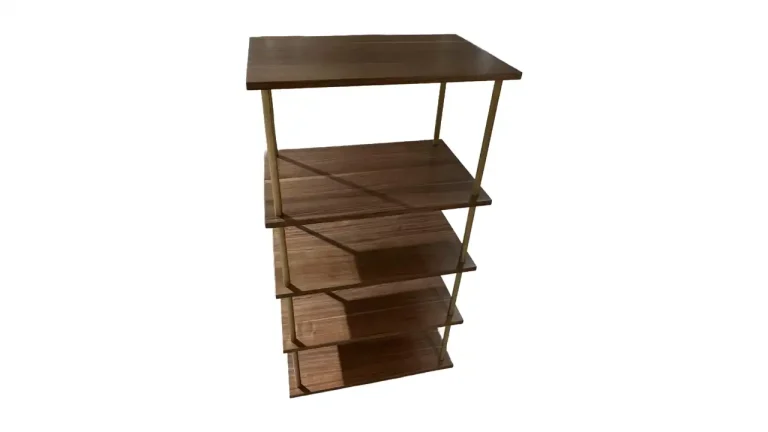
Entrance furniture is often forgotten, yet it handles daily clutter. Shoe racks and shoe cabinets keep dusty footwear out of the sitting room, a narrow console or wall shelf holds keys and post, coat hooks or a small hall wardrobe take bags and umbrellas, and a mirror lets you check your outfit before leaving. In duplexes, a bench by the door gives guests a place to sit while removing shoes.
Office and Outdoor Furniture
Two furniture types live outside the classic living and sleeping rooms: office furniture, which supports focused work, and outdoor furniture, which extends living space onto balconies, patios and compounds.
Office furniture
Office furniture includes executive desks, workstations, meeting tables, manager and visitor chairs, filing cabinets and reception counters. A home office needs at least a desk at the right height, an adjustable chair and lockable storage for documents. Executive suites add a side return, a credenza and visitor seating for client meetings, which suits business owners who receive guests at home.
Commercial furniture is the larger cousin of home office furniture. Hotels, restaurants, banks, clinics and corporate offices use the same basic types, such as desks, meeting tables, lounge seating and storage, but specify heavier frames, stain-resistant upholstery and finishes that can be cleaned many times a day. When a home doubles as a business address, choosing office pieces in a style that matches the rest of the house keeps the space looking residential while still working hard.

Outdoor furniture
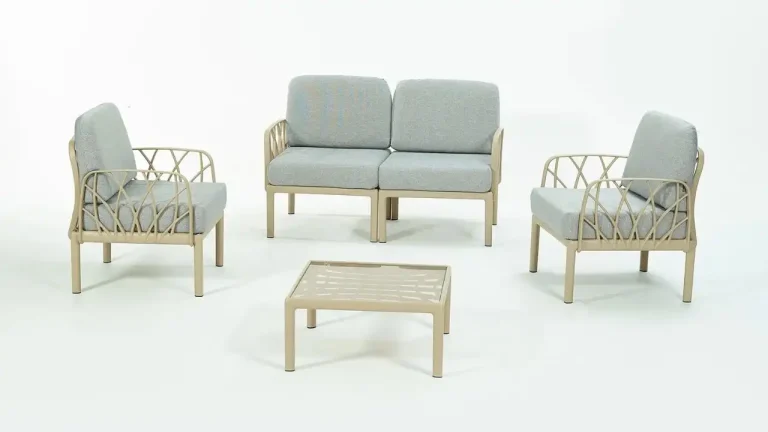
Outdoor furniture covers patio sets, garden chairs, loungers, hammocks and hanging swings. Pieces meant for outside use materials that tolerate sun and rain, such as powder-coated metal, synthetic rattan and weather-resistant fabric. In Nigeria, covered verandas and rooftop terraces are the most practical spots, because cushions last longer out of direct rain. Explore our outdoor furniture for swings and lounge sets.
Furniture Types Room by Room
Planning by room is the simplest way to turn furniture types into a shopping list. The table below summarises the core pieces for each space and the type of design that tends to work best in a Nigerian home. Start with the essentials in the second column and add decorative items later.
| Room | Key pieces | Style tip |
|---|---|---|
| Sitting room | Sofa set, center table, side stools, TV stand | Match fabric to traffic |
| Dining room | Dining table, chairs, sideboard | Round for small rooms |
| Bedroom | Bed, nightstands, wardrobe, dresser | Upholstered headboard |
| Kids’ room | Bunk or single bed, desk, storage | Rounded edges |
| Home office | Desk, office chair, cabinet | Adjustable seating |
| Outdoor | Patio set, swing | Covered placement |
The sitting room deserves the most planning because it is where guests form their impression of the home. For layouts, colour palettes and seating arrangements, see our guide to sitting room design in nigeria. Ceiling work also changes how furniture reads in a space, and our ideas for pop design for sitting room show how a POP ceiling and lighting can frame a sofa set or TV wall. If you are starting from an empty house, our step-by-step guide on how to furnish a home puts these furniture types in the right buying order.
Popular Furniture Styles
Furniture type describes what a piece does; furniture style describes how it looks. The same sofa set or bed can be made in several styles, and keeping one dominant style per room is what makes a space feel designed rather than collected. These are the styles Nigerian buyers meet most often in showrooms and online.
Contemporary and modern style
Modern style, which grew out of early twentieth-century design, is defined by clean lines, little ornament and honest materials such as wood, metal and glass. Contemporary style is simply what is current: today that means rounded sofa arms, boucle and textured fabrics, warm neutral colours, fluted panels and brass-tone details. Mid-century modern sits between the two, with tapered legs, walnut finishes and compact proportions that suit city apartments.
Classic, traditional and luxury style
Classic or traditional style borrows from European period furniture: carved wood, curved legs, tufted upholstery, rich fabrics and gold or bronze accents. It remains popular in Nigerian parlours for formal entertaining. Luxury or glam style updates the same grandeur with velvet, high-gloss lacquer, marble-look surfaces and statement headboards. Transitional style blends classic shapes with modern restraint for buyers who want elegance without heavy ornament.
Industrial, rustic and Scandinavian style
Industrial style pairs raw-looking wood with black metal frames and suits lofts, offices and restaurants. Rustic and farmhouse styles use visible grain, chunky timber and natural textures for a relaxed, homely feel. Scandinavian style combines pale woods, light colours and simple functional shapes. Sustainable furniture is less a style than an approach: durable construction, responsibly sourced timber and repairable designs that keep pieces in use for longer.
Traditional Nigerian Furniture Designs
Long before imported sofa sets, Nigerian artisans built furniture that combined function with symbolism. Traditional Nigerian furniture is mostly hand-carved from local hardwoods, finished with leather, cane or woven textiles, and decorated with patterns that identify a region, a family or a social rank. Many of these forms are still made today and appear in contemporary homes as statement pieces.
Materials: local woods, leather and cane
Iroko is the classic timber of traditional Nigerian furniture because it resists decay and insects, which suits a humid climate. Mahogany and teak are durable and carve cleanly, while ebony is prized for its dark colour and density in small decorative pieces. Leather from northern Nigeria, historically tanned in Kano and Sokoto, covers stools and poufs. In the south, cane, rattan and raffia are woven into chairs, mats and baskets that stay cool in hot weather.
Carving, motifs and regional styles
The defining feature of traditional Nigerian furniture is carving. Yoruba carvers produced figurative stools, doors and veranda posts, and the early twentieth-century master Olowe of Ise remains famous for his carved palace doors and posts. Motifs often draw on nature, people and geometry, including interlace, spirals, concentric circles and stylised animals. Benin, Igbo and northern traditions each have their own vocabulary, so a carved stool from one region rarely looks like one from another.
Traditional pieces still found in Nigerian homes
Several traditional furniture types remain common. Carved wooden stools and low chairs, sometimes with leather seats, are used by elders and at ceremonies. Low tables with carved legs hold food and drinks at floor level. Wooden storage chests with hinged lids keep cloth, aso-oke and valuables. Leather poufs and woven cane chairs add texture to modern living rooms, and carved panels are often reused as headboards or wall art.
Modern Furniture Designs in Nigeria
Modern furniture designs have grown quickly in Nigerian cities over the last two decades. Urban flats, open-plan duplexes and a growing professional class have created demand for furniture that is lighter, cleaner and easier to arrange than heavy carved pieces, while still feeling premium.
What defines modern Nigerian furniture
Modern designs favour clean lines, low profiles, slim metal or tapered wooden legs and neutral upholstery in cream, grey, taupe or earthy brown. Mixed materials are common, such as wood with brass-tone metal or a stone-look top on a lacquered base. Modular sofas, split center tables and wall-mounted TV units reflect the need for flexible, space-saving layouts in city homes.
Why modern furniture designs are rising
Several forces drive the change. Social media lets Nigerians see international interiors daily, and Lagos design events now showcase local makers alongside imported brands. Smaller apartments in Lagos and Abuja reward compact, multi-purpose pieces. Buyers also expect furniture that photographs well, coordinates across rooms and is easy to clean, which favours matched sets and simple silhouettes over one-off carved items.
Blending traditional and modern designs
The most interesting furniture designs in Nigeria today mix both worlds. Lagos industrial designer Nifemi Marcus-Bello has built a reputation for simple, affordable pieces aimed at urban Nigerians, architect Tosin Oshinowo has designed chairs that celebrate Nigerian culture, and British-Nigerian designer Yinka Ilori reworks chairs with bold colours inspired by Nigerian stories. At home, the same idea works when a modern sofa set sits beside a carved stool or an aso-oke cushion.
Choosing the Right Furniture Type for Your Space
Knowing the furniture types is only half of the decision; the other half is matching each type to your room, climate and lifestyle. Three checks prevent the most common mistakes buyers make.
Measure the room and the doors
Measure each wall, the window positions and the clear walkway before you choose sofa or bed sizes, and leave at least 75 to 90 cm for circulation. Also measure doors, stairwells and lift openings, because large sofa sets, wardrobes and dining tables must fit through them. Sketching the room on paper with each piece drawn to scale reveals problems early.
Match materials to climate and use
Humidity, dust and strong sunlight all affect furniture in Nigeria. Choose sealed or lacquered wood finishes, fabrics with a tight weave that are easy to vacuum, and leather or leather-look upholstery where children and pets are active. Keep solid wood away from direct sun and air-conditioning vents, and place outdoor pieces under cover so they last through the rainy season.
Plan for how long you will keep each piece
Separate long-term pieces from short-term ones. A sofa set, dining table, bed and wardrobe are used every day for many years, so they justify better frames, solid joinery and durable fabrics. Side stools, accent chairs and decor can be changed more often to refresh a room. Buying the long-term pieces first, in one consistent style, gives you a stable base to build on.
Types of Furniture: FAQs
What are the main types of furniture?
The main types of furniture are seating, tables, beds, storage and outdoor furniture. Seating includes sofas and chairs, tables include center and dining tables, beds cover everything you sleep on, storage includes wardrobes and TV stands, and outdoor furniture covers patio sets and swings used on balconies or in compounds.
What are the five furniture categories?
The five furniture categories are seating, tables and surfaces, sleeping furniture, storage and display, and outdoor or special-purpose furniture. Grouping pieces this way, by the activity they support, makes it easier to plan a full house and to check that every room has the essential items before you add decorative extras.
What is the difference between a sofa and a couch?
A sofa and a couch mean the same thing today: an upholstered seat for two or more people. Historically a couch had a low back for lying down, while a sofa had arms and a full back. In Nigeria many people simply call the whole sofa set “the chair” or the parlour chairs.
What are the different types of chairs?
The common types of chairs are armchairs, accent chairs, recliners, dining chairs, office chairs, stools, poufs and benches. Armchairs and recliners are built for relaxing, dining chairs are upright for eating, and office chairs adjust for long working hours. Stools and poufs add flexible extra seating when you host guests at home.
What tables are used in a sitting room?
A sitting room usually uses a center table, side stools and sometimes a console table. The center table sits in front of the sofa for drinks and decor, side stools sit beside armchairs, and a console table stands against a wall or behind the sofa to hold lamps, keys and photographs.
What is traditional Nigerian furniture?
Traditional Nigerian furniture is hand-made furniture built from local materials such as iroko, mahogany, leather and cane, often decorated with carving. Typical pieces include carved wooden stools, low tables, storage chests, leather poufs and woven cane chairs. Designs vary by region, with Yoruba, Benin, Igbo and northern traditions each using their own motifs.
Which wood is best for furniture in Nigeria?
Iroko is widely considered the best wood for furniture in Nigeria because it is strong, stable and resists decay and insects. Mahogany and teak are also durable and attractive choices. Lighter woods such as obeche suit drawers and cabinet interiors, while engineered boards like MDF and plywood are used in modern cabinets and wardrobes.
What furniture designs are trending in Nigeria?
Trending furniture designs in Nigeria include modular corner sofas, upholstered beds with tall channel-tufted headboards, split or nesting center tables, wall-mounted TV units and neutral colour palettes. Buyers are also mixing modern pieces with traditional accents, such as carved stools, leather poufs and aso-oke cushions, to give a contemporary room a local identity.
What furniture does a bedroom need?
A bedroom needs a bed, a mattress, at least one nightstand and storage for clothes, usually a wardrobe and a dresser. A dressing table with a mirror, a bench at the foot of the bed and a reading chair are useful extras. Coordinated bedroom sets make it easier to keep finishes and handles consistent.
What is the difference between movable and built-in furniture?
Movable furniture stands on its own and can be rearranged or taken with you when you relocate, such as sofas, beds and dining sets. Built-in furniture is fixed to the walls or floor, such as kitchen cabinets and fitted wardrobes, and stays with the building. Tenants usually choose movable pieces while homeowners often add built-in storage.