

Blog
Office Chair Buying Guide for Nigerian Workspaces (2026)
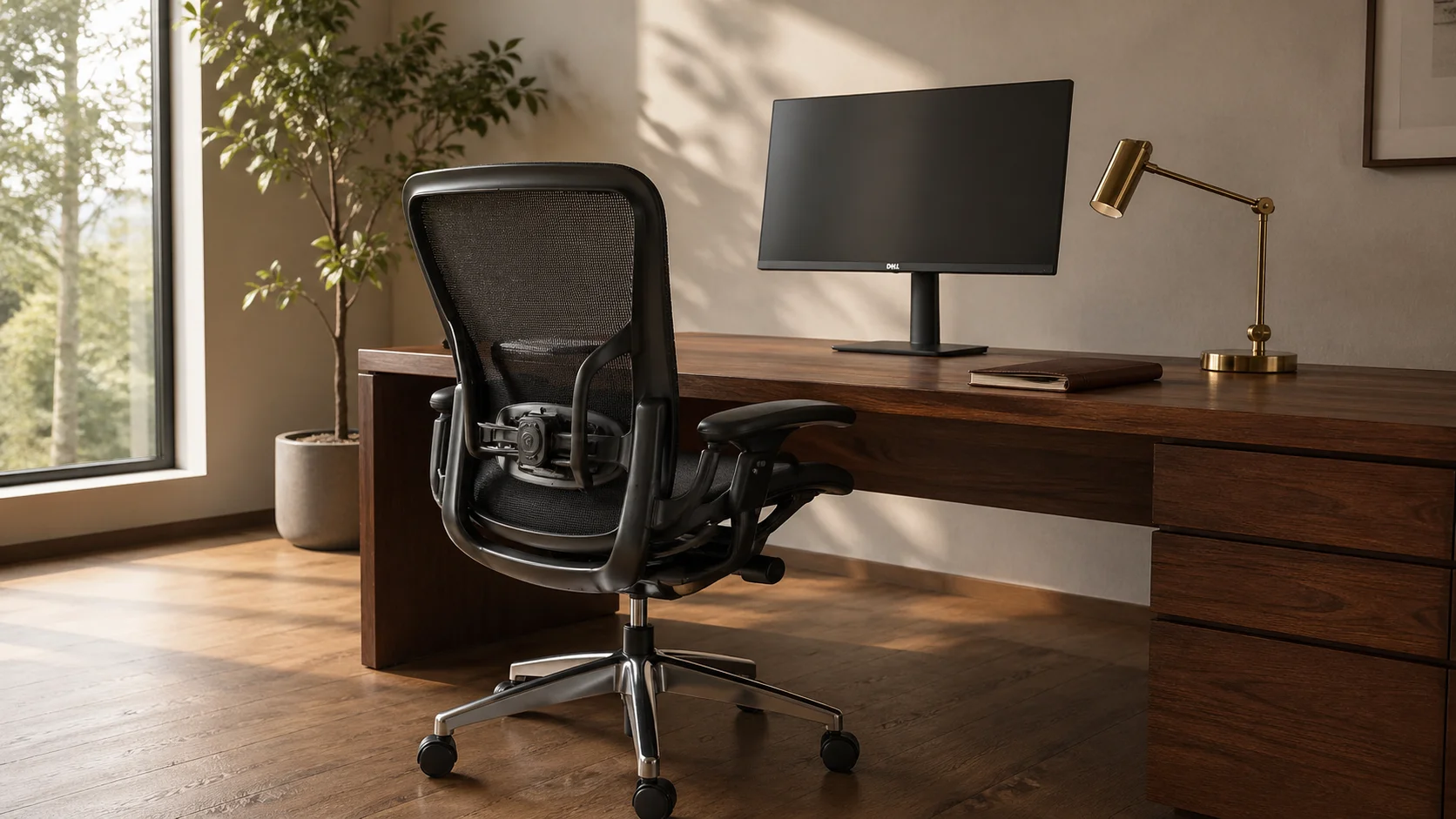
An office chair is the one piece of furniture you spend more hours in than your bed, and it is also the piece most Nigerian buyers under-spend on relative to its impact on daily comfort. The price spread is wide — a serviceable mesh task chair costs ₦55,000 in Lagos and Abuja, while a fully-featured ergonomic executive chair from the imported tier can run ₦1.8 million for essentially the same job — and the decision framework is more about how many hours you sit and what your back actually needs than about brand prestige. At Vento Furniture our office-furniture consultations have gotten significantly more detailed since 2022 as the home-office category matured into a primary daily-use furniture purchase rather than a casual one. This 2026 guide walks through the four cost drivers, the ergonomic features that actually matter, the four chair categories worth considering, and what to expect from Nigerian retailers.
Quick Summary
- Entry mesh task chair: ₦55,000–₦140,000 for 4-6 hour daily use, basic adjustability
- Mid-range ergonomic mesh: ₦180,000–₦450,000 for 8-hour daily use, full adjustability, lumbar support
- Premium ergonomic (Herman Miller, Steelcase, Haworth tier): ₦650,000–₦1.8 million imported
- Executive leather: ₦220,000–₦950,000 — looks better than it works ergonomically beyond 4 hours
- Best for hybrid workers: mid-range ergonomic mesh — meaningfully better posture support than entry, half the cost of premium
What Drives Office Chair Cost in Nigeria
Office chair pricing in Nigeria is built from four inputs, and like any furniture category the inputs interact. The four inputs are mechanism complexity, frame material, padding and upholstery type, and lumbar adjustability — and the relative weight of each shifts depending on whether you are buying a chair for a four-hour-daily home office or an eight-hour-daily primary workstation. Mechanism dominates the cost stack at the entry tier, lumbar adjustability dominates at the premium tier, and padding type dominates the daily comfort experience across all tiers in Nigerian indoor temperatures. At Vento Furniture our showroom teams have noticed home-office furniture demand jump significantly since 2022, and the framework below is the one we walk customers through before they choose between a ₦150,000 task chair and a ₦600,000 ergonomic system.
Mechanism and adjustability
The reclining mechanism is the single largest cost variable in any office chair. A basic chair has a tilt-and-lock mechanism — you lean back, you lock the angle. A mid-range chair has a synchro-tilt mechanism that adjusts the seat and back angle in coordinated ratios as you recline. A premium chair has a full asynchronous mechanism with independent control of seat tilt, back tilt, lumbar curve, and seat depth. The mechanism alone can swing the cost of an otherwise identical chair by 200-400 per cent.
Frame and base material
Nylon-resin frames are the budget tier. Glass-fibre-reinforced nylon is the mid-range standard. Aluminium frames are the premium tier — lighter, stronger, better for hot Nigerian environments because metal dissipates heat better than plastic. Aluminium bases also resist the cracking that nylon bases develop after three to five years of daily use under load. Pay the ₦60,000–₦120,000 premium for an aluminium base on any chair you intend to use eight hours a day for five years or more.
Padding and upholstery
Mesh upholstery breathes — meaningful in Lagos, Abuja, and Port Harcourt where the daytime indoor temperature regularly sits above 28°C. Leather and faux-leather hold heat and sweat. Fabric padding sits between the two. For Nigerian conditions, mesh wins for any chair used more than four hours daily; leather is a status choice for executive offices used for shorter visits and meetings rather than continuous work.
Lumbar support and adjustability
A fixed lumbar pad is the basic offering — works for some bodies, fails for others. An adjustable lumbar (height-only) is the mid-range standard. A two-axis adjustable lumbar (height plus depth) is the premium tier and the single most useful upgrade for anyone with existing back problems or anyone planning long-term daily desk work.
The Four Office Chair Categories Worth Considering
Most Nigerian retailers stock chairs across these four categories. Knowing the trade-offs before you visit a showroom will save you from being up-sold into a category that does not fit your actual usage pattern. The four categories run from entry mesh through premium imported and executive leather, and each is built around a different priority — affordability, ergonomic precision, prestige, or some balance of all three. Match the category to how you actually work rather than to how you imagine your future office should look. The most common over-spend in this market is buying executive leather for a primary daily workstation; the most common under-spend is buying entry mesh for a chair you will live in eight hours a day for years.
1. Entry mesh task chair
Entry mesh task chairs cover the ₦55,000–₦140,000 band. They have basic synchro-tilt mechanisms, fixed lumbar pads, height-adjustable arms (sometimes), and nylon-resin frames. They are appropriate for occasional desk work — three to five hours daily, mostly seated for shorter sessions of one to two hours at a stretch. Beyond that usage profile they will produce lower-back fatigue within a few months. Useful for guest desks, secondary home-office setups, and student workstations.
2. Mid-range ergonomic mesh
Mid-range ergonomic mesh chairs cover the ₦180,000–₦450,000 band and represent the best price-to-comfort trade for most working Nigerian professionals. These chairs have full synchro-tilt mechanisms, adjustable lumbar (often two-axis at the upper end of the band), aluminium or reinforced-nylon bases, and adjustable arms in three or four axes. For a hybrid worker spending six to eight hours daily at a desk, this category will sustain comfortable posture for the full day in a way that entry chairs cannot. Vento Furniture’s office-table range carries coordinated chair-and-desk pairings in this band, which is the most efficient way to set up a complete home office in a single visit. The most common configuration we see customers settle on is a 120-140 cm desk paired with a mid-range ergonomic mesh chair from the lower end of the band — a combination that fits most Nigerian apartment home offices without crowding the rest of the room.
3. Premium imported ergonomic
The Herman Miller Aeron, Steelcase Leap, Haworth Fern, and a handful of other premium imports represent the top of the Nigerian market. Imported through specialist retailers in Ikoyi and Wuse 2, these chairs run ₦650,000–₦1.8 million depending on model and configuration. The premium pays for engineered ergonomics validated through decades of musculoskeletal research, twelve-year warranties, and the kind of build quality that lasts twenty years rather than five. For anyone with existing back problems, anyone working ten-plus hours daily at a desk, or anyone treating the chair as a long-term investment, the premium tier is worth the cost.
4. Executive leather
Executive leather chairs cover the ₦220,000–₦950,000 band and prioritise visual presence over ergonomic precision. The high-back leather profile communicates seniority in meeting contexts, but the cushioned design typically lacks the active posture support of mid-range ergonomic mesh. Useful for executive offices where the chair sees four hours of meetings daily rather than continuous work; questionable for primary daily-use stations. Vento Furniture’s executive ranges in the luxury collection cover this category for buyers prioritising the meeting-room aesthetic.
2026 Price Snapshot — Lagos and Abuja
The figures below are 2026 ranges from established Lagos and Abuja office-furniture retailers. Currency volatility moves these bands quarter-to-quarter, so treat the figures as orientation rather than firm quotes.
| Category | Daily Use | Budget Tier | Mid-Range | Premium |
|---|---|---|---|---|
| Entry mesh task chair | up to 5 hrs | ₦55,000–₦90,000 | ₦95,000–₦140,000 | — |
| Mid-range ergonomic mesh | 6–8 hrs | ₦180,000–₦260,000 | ₦280,000–₦380,000 | ₦400,000–₦450,000 |
| Premium imported ergonomic | 8+ hrs | — | — | ₦650,000–₦1,800,000 |
| Executive leather | meetings, 4 hrs | ₦220,000–₦380,000 | ₦450,000–₦650,000 | ₦750,000–₦950,000 |
Budget tier = nylon-resin frame, basic synchro-tilt, fixed lumbar. Mid-range = aluminium or reinforced-nylon base, full synchro-tilt, adjustable lumbar. Premium = engineered mechanism with independent seat and back tilt, two-axis lumbar, twelve-year warranty.
What to Verify Before Signing in Lagos or Abuja
Three checks separate office-chair quotes that will deliver from quotes that will disappoint. Each check takes a few minutes during a showroom visit and saves significantly more in avoided buyer’s regret. The pattern across all three is the same: showroom interactions are optimised to close the sale within the visit, not to optimise the buyer’s ten-year experience. Slowing the close down with these checks is what separates buyers who are happy with the chair eighteen months later from buyers who are quietly hunting for a replacement.
Sit for fifteen minutes minimum
Showroom test-sits of two minutes tell you almost nothing. The discomfort points in any chair show up between minute eight and minute fifteen, which is when the marginal pressure on your tailbone, lower back, and shoulders becomes noticeable. Most Lagos and Abuja showrooms will allow a longer test-sit if you ask; almost no buyers ask, and almost all of them regret it within a month. The right way to do this is to ask up front before any sales conversation starts — a consultant who refuses a fifteen-minute test-sit on a chair you might live in eight hours a day is signalling something about how the post-sale experience will go.
Verify warranty terms in writing
A two-year warranty on the gas lift cylinder, three years on the mechanism, and five years on the frame is the mid-range standard. Premium imported chairs typically offer twelve years on everything. Anything less than the mid-range standard signals a chair built to a price point that will not last; anything written verbally without paperwork is not a warranty at all. If you are pairing the chair with a desk and other office furniture, the accessories range covers the secondary pieces that complete a workspace.
Verify the fit-out is for your body, not the showroom average
Office chairs are sized for an “average” user that does not actually exist. If you are taller than 1.85 metres or shorter than 1.65 metres, ask specifically about chair size variants — most premium ranges offer Small/Medium/Large frames, and the wrong size will be uncomfortable regardless of how good the underlying design is. For a complete view of where to shop in Lagos for office furniture coordination, see our Lagos furniture stores guide, which maps the city’s retail clusters by district. For a verified general overview of office chair ergonomics — useful background on what features to prioritise — Wikipedia’s office chair article covers the design history and current best practice. Vento Furniture’s Wuse 2 Abuja location stocks office-chair ranges across the entry-to-premium tiers, and our consultants are happy to spend the test-sit time on each option without pushing toward a decision.
Setting Up the Rest of the Workspace
A good office chair only solves half the workspace problem. The desk height, depth, and surface material matter just as much for sustained-use comfort, and the desk-and-chair pairing is the decision that most home-office buyers regret if they buy them six weeks apart from different suppliers. Our Vento Furniture consultations on home-office setups typically walk both pieces together — desk dimensions matched to your reach envelope and the chair you have just selected, then secondary pieces (storage, lighting, cable management) chosen to fit the resulting layout.
For the desk step, our office-table range carries options across the 100-160 cm width band that pairs naturally with the chair categories described above. For storage, monitor stands, and cable-management pieces that complete a workspace, the accessories range covers the secondary items without requiring a full office-suite commitment.
Frequently Asked Questions
How much should I spend on a home-office chair if I work eight hours a day at a desk?
For sustained eight-hour daily use, the ₦180,000–₦450,000 mid-range ergonomic mesh band gives the best total-comfort-to-cost ratio. Below that band, the chair will produce lower-back fatigue within months; above that band, you are paying for engineering refinements that matter to people with existing back problems but show diminishing returns for healthy users. The most common mistake we see in 2026 is professionals spending ₦80,000 on a chair they then sit in for ten hours a day for two years, then spending ₦400,000 on a replacement after their back protests.
Is mesh or leather better for a Nigerian office chair?
Mesh wins for any chair used more than four hours daily. Mesh upholstery breathes, which matters significantly in Nigerian indoor temperatures, and the open-weave structure conforms to your body shape better than fixed-cushion designs. Leather wins for executive-meeting contexts where the chair is occupied for shorter sessions and visual presence matters more than long-session comfort. For a home office or a primary professional workstation, choose mesh.
Should I buy a Herman Miller or Steelcase chair in Nigeria?
For most professional users the answer is no — the ₦650,000–₦1.8 million premium over a quality mid-range ergonomic mesh chair does not pay back in proportional comfort improvement for healthy users without specific back problems. Herman Miller and Steelcase chairs are exceptional pieces of engineering, but the marginal benefit over a ₦400,000 mid-range chair is modest for most bodies. The cases where the premium is worth it: existing chronic back problems, ten-plus hour daily desk work, treating the chair as a fifteen-year investment, or preferring the design language and willing to pay for it.
What ergonomic features matter most in an office chair?
Three features matter most: full synchro-tilt mechanism (seat and back tilt in coordinated ratios), adjustable lumbar support (height-only minimum, two-axis ideal), and adjustable arms in three or four axes. Add a fourth — seat depth adjustment — for users taller than 1.85 m or shorter than 1.65 m. Skip features that are mostly marketing: headrests rarely improve daily comfort for users with normal posture, and “memory foam” cushions degrade faster in Nigerian indoor temperatures than standard high-density foam. The first three features together produce 80 per cent of the comfort uplift over a basic chair; everything else is marginal.
How long should a quality office chair last in daily Nigerian use?
A mid-range ergonomic mesh chair (₦180,000-₦450,000 band) should last 8-12 years of eight-hour daily use with reasonable care. Premium imported chairs (Herman Miller, Steelcase, Haworth tier) last 15-25 years and typically carry 12-year warranties. Entry mesh chairs at the ₦55,000-₦140,000 band last 3-5 years before the gas lift cylinder fails, the synchro mechanism stiffens, or the mesh stretches beyond support tolerance. The single biggest lifespan factor is the gas lift cylinder, which carries the weight cycle of every sit-and-stand — branded cylinders last twice as long as generic equivalents and replacement cost is roughly ₦15,000-₦35,000.
Can a budget office chair be good enough for occasional desk work?
Yes — for under four hours daily, an entry mesh task chair at ₦55,000-₦140,000 is appropriate. The compromise is sustained-use comfort: budget chairs work fine for short sessions but produce lower-back fatigue beyond five hours. Use cases where budget chairs make sense: guest workstations, secondary home-office stations, student desks, occasional weekend work setups. Use cases where budget chairs fail: primary professional workstations, hybrid worker daily setups, anyone working six-plus hours daily at a desk. The most common 2026 mistake we see is buying budget for what becomes a primary station — replacement after eighteen months ends up costing more than the right mid-range chair would have at purchase.
How do I correctly adjust an ergonomic office chair?
Five adjustments in order: (1) seat height — feet flat on floor, thighs parallel to floor, ankle slightly forward of knee; (2) seat depth — three to four fingers between back of knee and seat edge; (3) lumbar height — pad sits in the small of your back at belt-line; (4) arm height — elbows at 90-100 degree angle when typing, shoulders relaxed; (5) tilt tension — chair recline resistance matched to your weight (heavier user needs more tension). Repeat the first three adjustments after the first week of use as your body adapts to the new chair. Most users skip lumbar adjustment entirely and lose 60-70 per cent of the chair’s ergonomic value.
What is the difference between a task chair and an ergonomic chair?
A task chair is a basic work chair with minimal adjustability — typically synchro-tilt, fixed lumbar, height-adjustable seat, optional fixed arms. Designed for short-session work up to four hours daily. An ergonomic chair adds full adjustability across multiple axes: synchro mechanism with independent seat and back tilt, adjustable lumbar (often two-axis), arms adjustable in three or four directions, often seat-depth adjustment. Designed for six-plus hour daily use. Price difference: task chairs typically ₦55,000-₦140,000 in Nigeria; ergonomic chairs ₦180,000-₦450,000 for the mid-range band, ₦650,000-₦1,800,000 for premium imports. Match the category to actual daily-use hours, not to job title.
Where can I buy authentic Herman Miller chairs in Nigeria?
Authentic Herman Miller chairs in Nigeria sell through specialist office-furniture retailers in Ikoyi (Lagos) and Maitama / Wuse 2 (Abuja). Confirm authenticity through three checks: serial number on the underside of the seat (Herman Miller maintains a verifiable registry), 12-year warranty paperwork issued by an authorised distributor, and price that aligns with the ₦650,000-₦1.8 million range — anything significantly cheaper is almost certainly counterfeit or grey-market import without warranty. Be wary of online listings at suspiciously low prices; the Nigerian counterfeit market for Herman Miller Aeron chairs is active and the visual difference between a counterfeit and an authentic chair is subtle until you sit in one for fifteen minutes.
How often should I replace an office chair gas lift cylinder?
Gas lift cylinders typically last 5-8 years in daily eight-hour use before pressure loss causes the chair to slowly sink during long sessions. Premium-tier branded cylinders (Stabilus, Suspa) last 8-12 years; budget generic cylinders fail at the lower end of the 5-7 year band. Replacement cost is ₦15,000-₦35,000 for the cylinder itself plus ₦5,000-₦15,000 labour at any office-furniture repair shop in Lagos or Abuja. Sign of imminent failure: the chair sinks more than 50 mm overnight when nobody is sitting in it, or you cannot maintain a consistent height across a working day. Replacing the cylinder rather than the entire chair is almost always the right economic choice.