

Blog
TV Stand & TV Console Designs in Nigeria 2026
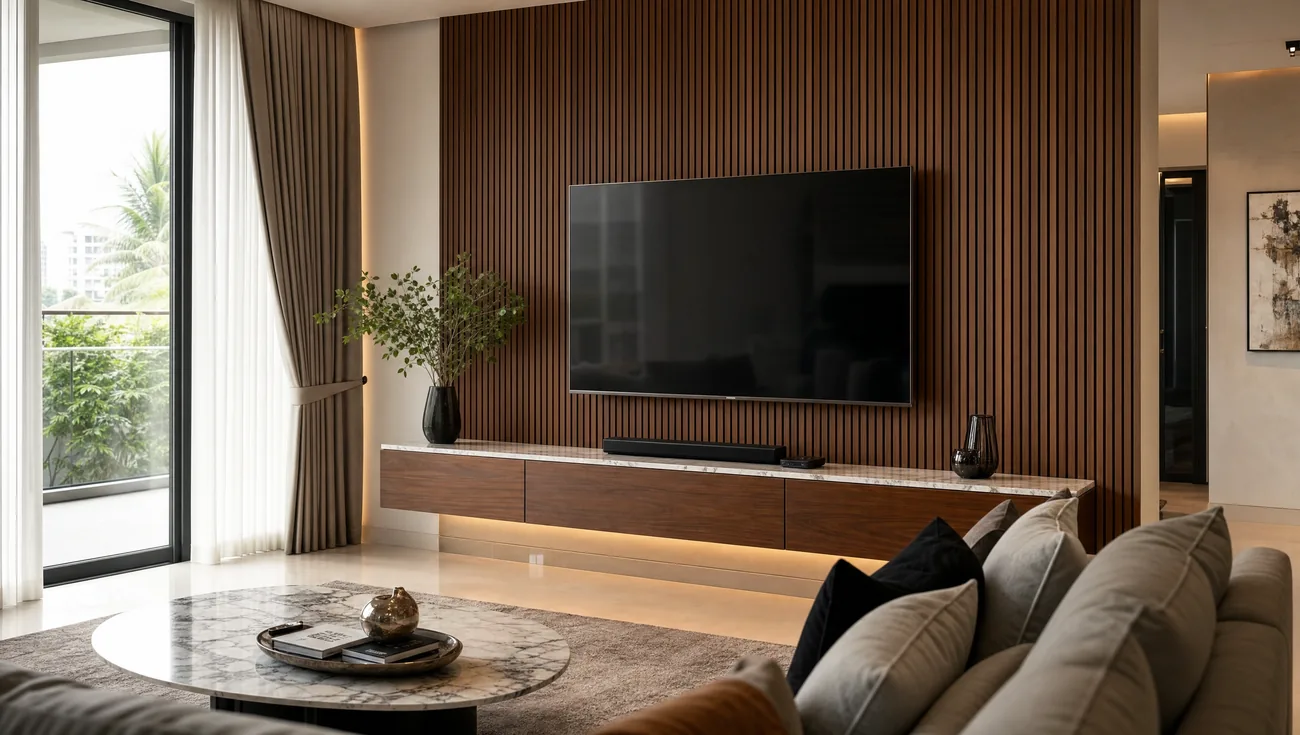
The best TV stand and TV console designs for Nigerian homes in 2026 are floating consoles, full-wall entertainment units, marble-top consoles, wooden consoles, POP TV walls, fluted panels and two-tone storage units. Pick a design at least 30 cm wider than your television, with closed storage for the decoder and cables, in a finish that matches your sofa and walls.
The TV console is the anchor of the Nigerian living room. It sits on the wall everyone faces, carries the screen the family gathers around and hides the decoder, the soundbar, the stabiliser and the cables that would otherwise clutter the most-looked-at wall in the house. This guide collects the TV stand pictures and television cabinet ideas we see most in Lagos, Abuja, Port Harcourt and Kaduna homes: the nine core designs, twelve more worth considering, wooden and style-led consoles, wall console designs, small-room solutions, sizing, styling and care. Every photograph comes from the current Vento TV stand collection, so each idea links to a real piece you can see in person.
9 TV Stand & TV Console Designs for Nigerian Homes (With Pictures)
Style is the first decision because it sets how the whole wall reads, from a quiet low cabinet to a full feature wall. These nine are the TV console designs for living room walls that Nigerian families ask for most this year, from compact apartment stands to floor-to-ceiling entertainment walls, and every TV stand picture below shows a real piece.
1. Floating & Floating-Look Console
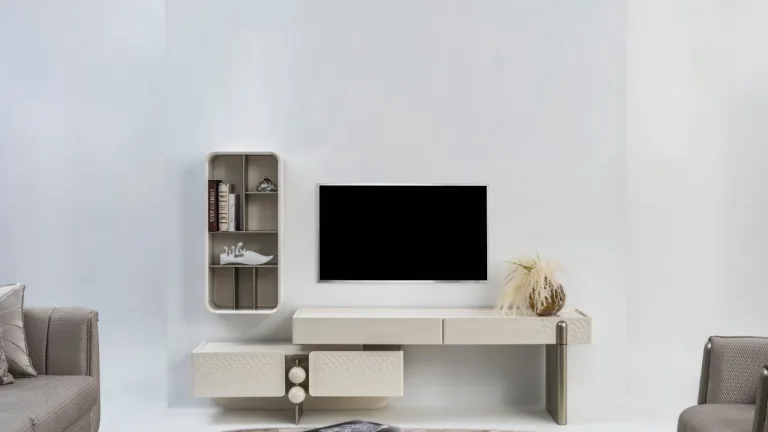
A low, slim cabinet either fixed to the wall with no legs or raised on a recessed plinth so it appears to hover. The floor runs unbroken underneath, which makes a small apartment feel larger and makes sweeping easy. Pair it with a matching wall shelf to balance the screen. Best for: modern apartments, small sitting rooms, minimalist interiors.
2. Full-Wall Entertainment Unit
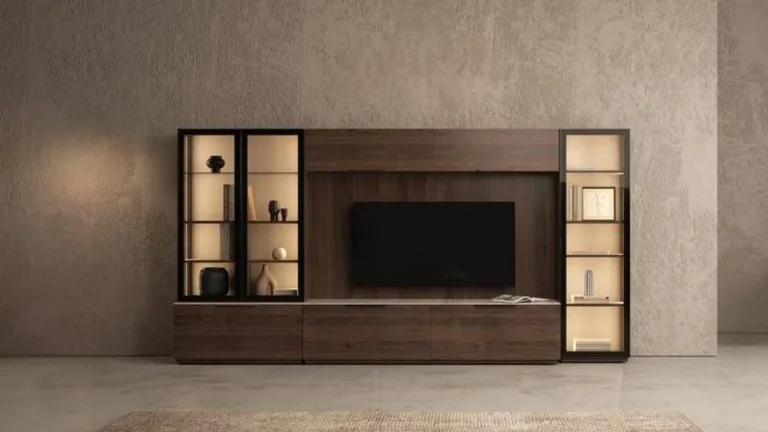
A unit that spans the width of the wall, combining a central TV panel, closed base cabinets and display shelving on either side. It turns the television wall into the focal point of the room and gives a large family enough storage for everything around the screen. Best for: large living rooms, media rooms and duplex sitting rooms.
3. Marble-Top Console

A wooden or lacquered body finished with a marble or marble-look top. It reads as expensive from across the room and echoes a marble centre table or marble floor. Engineered stone gives the same look with better stain resistance. Best for: formal sitting rooms, luxury duplexes and marble-floored interiors.
4. Modern Wooden Console
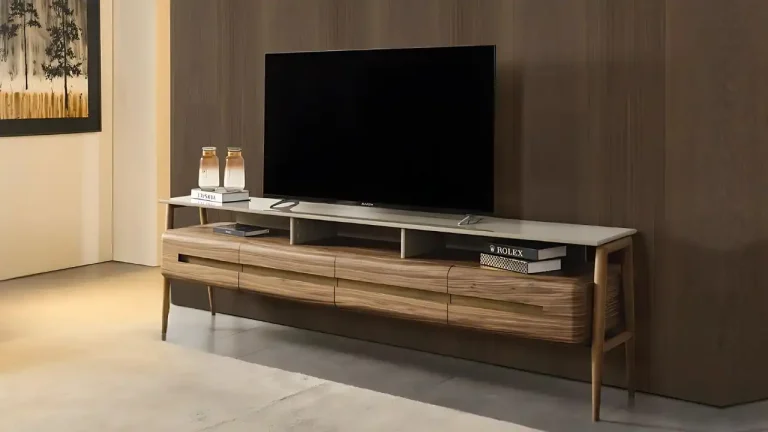
A clean-lined cabinet in walnut, oak or teak tones with drawers or push-to-open doors. Wood warms a tiled room, hides everyday wear and suits almost every sofa colour, which is why it remains the most dependable family design. Best for: family sitting rooms, traditional and transitional interiors.
5. High-Gloss Lacquered Console

A flat-front cabinet in high-gloss cream, white or charcoal with minimal handles. It reflects light, keeps a bright room feeling open and wipes clean in seconds, though it shows fingerprints. Push-open doors keep the front spotless. Best for: modern apartments, bright minimalist rooms and gloss bedroom suites.
6. POP-Integrated TV Wall
The console set into a plaster of Paris feature wall with a recessed TV niche, hidden lighting and ceiling detail above. The carpenter and the POP installer plan the unit and the wall together, so the cabling disappears and the whole wall reads as one built-in piece. It is the most distinctly Nigerian luxury TV wall, and it works best on a new build or full renovation where the wiring can be planned before plastering. For layouts and lighting ideas, see this guide to POP TV stand design. Best for: formal sitting rooms designed around the screen.
7. Compact Apartment Stand
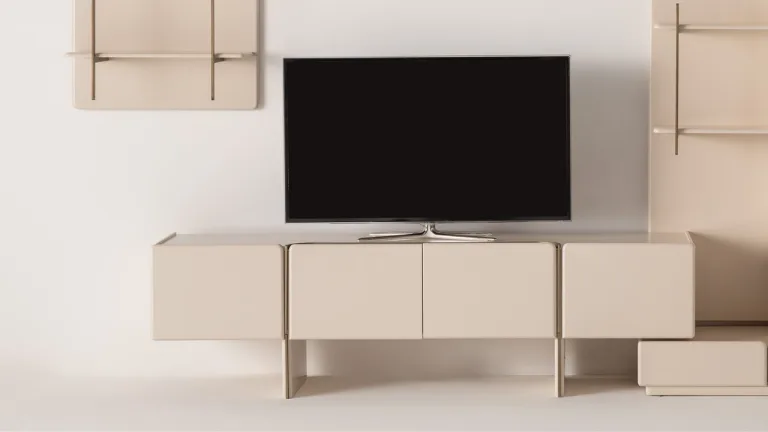
A short, single-cabinet stand sized for a 43 to 55 inch screen, with one open bay for the decoder and closed doors or a drawer for remotes. It suits two-bedroom flats and self-contained apartments where the wall cannot take a full unit. Keep the finish light so the wall feels wider. Best for: small apartments, bedrooms and study rooms.
8. Fluted & Slatted Console

Doors or panels finished in vertical fluting or timber slats. The texture adds depth without adding colour, catches warm light beautifully and makes a plain wall look designed. It is the fastest-rising finish of the last two years. Best for: feature walls, modern-luxe sitting rooms and rooms that need texture rather than pattern.
9. Two-Tone Console with Open and Closed Storage
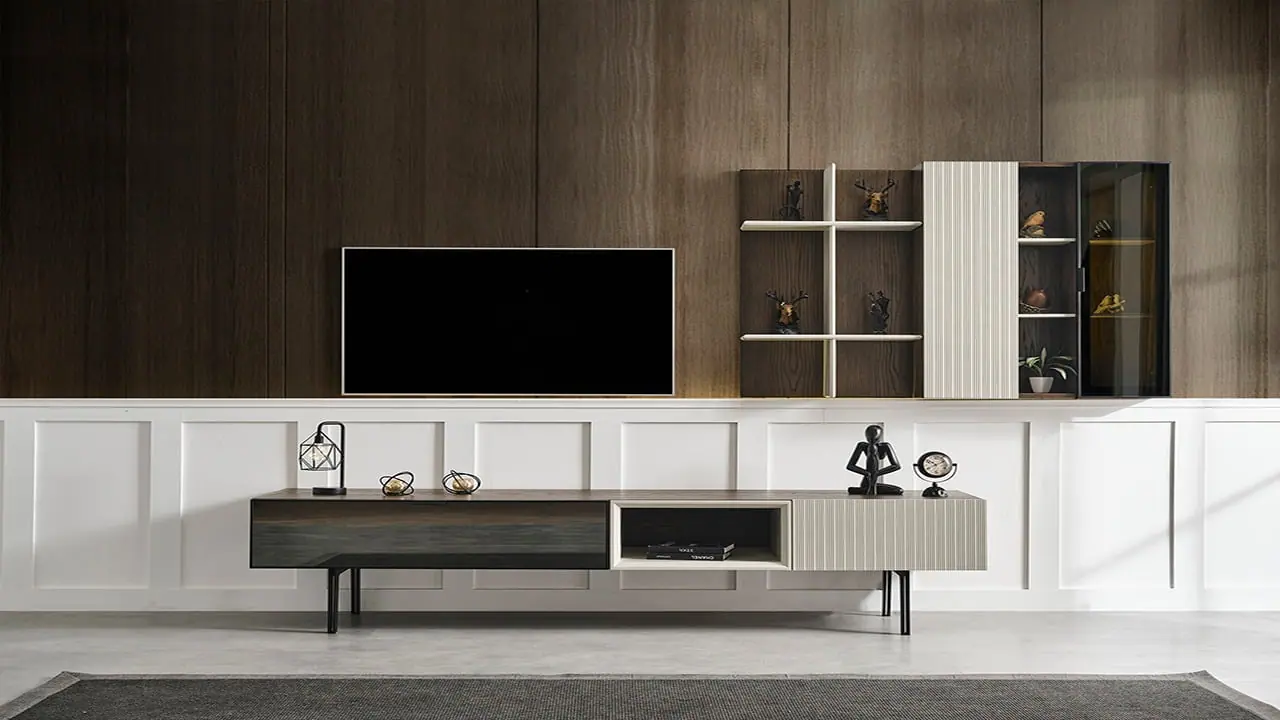
A cabinet mixing two finishes, such as dark wood with white or matte with gloss, and balancing open display shelves against closed doors. It shows off décor while hiding the decoder, gaming console and cables. Best for: family rooms, open-plan living and dining spaces and homes that need display and storage in one unit.
Space-Saving & Multi-Use TV Console Designs
The nine designs above cover most rooms, but many homes need a specific solution: an awkward corner, a room that doubles as a study, a television that should disappear when guests arrive. These six ideas solve layout problems and are the ones most often missing from a first shortlist.
10. Corner TV Stand
A triangular or angled cabinet that fits into a corner and faces the screen diagonally across the room. It frees both long walls for seating and windows, which helps in square sitting rooms and bedrooms. Check the viewing angle from every seat before committing, because a corner screen is harder to see from a sofa placed against the same wall.
11. Modular Wall System

Separate base cabinets, wall boxes and floating shelves arranged around the screen in an asymmetric composition. Modular units can be rearranged when you move house or change the TV, which makes them a practical choice for renters and growing families.
12. Console with Open Wall Shelving

A low console paired with floating wall shelves above or beside the TV. The shelves carry books, plants and family photographs, so the wall reads as a curated display rather than a black rectangle. Keep the shelf styling sparse so the screen still dominates.
13. Multi-Functional Console
A unit that does a second job: a console that extends into a study desk, a waist-high cabinet that divides an open-plan living and dining space, or a bookcase wall with a TV bay. It is the smart answer for one-room apartments and family homes where every metre has to work twice.
14. Hidden TV Cabinet
A tall cabinet with sliding, folding or barn-style doors that close over the screen. When the doors shut, the room becomes a formal lounge or a dining space with no black screen in view. It is popular in multipurpose rooms and bedrooms where the television should not dominate.
15. Swivel & Rotating Stand
A stand or wall arm that lets the screen turn towards the dining table, the kitchen counter or a second seating area. In an open-plan home it means one television serves two zones, and it reduces glare from windows at different times of day.
Statement & Style-Led TV Console Designs
When the television wall is the first thing guests see, the console becomes a design piece in its own right. These six ideas focus on the look of the wall: framed backdrops, a fireplace glow, glass, pure simplicity, raw industrial materials and classic Nigerian luxury.
16. Framed TV Panel Backdrop
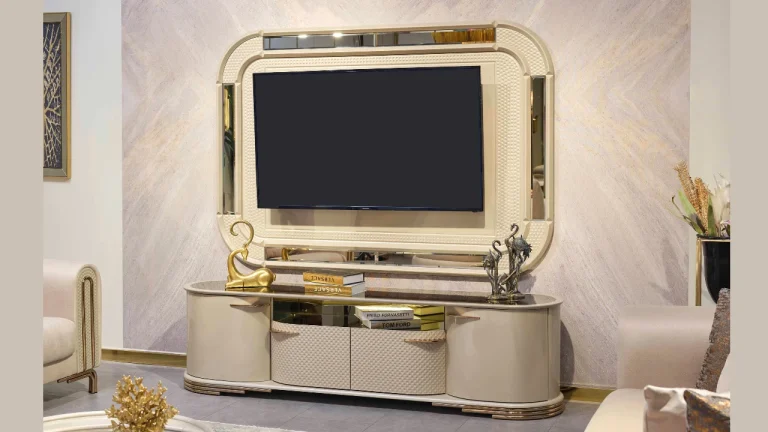
A large upholstered, lacquered or mirrored panel mounted behind the screen, with the console below. The frame turns the television into a centrepiece, hides the mounting bracket and gives the wall a finished outline without any POP work. Best for: rented homes and formal rooms where building into the wall is not an option.
17. TV Wall with Fireplace Effect
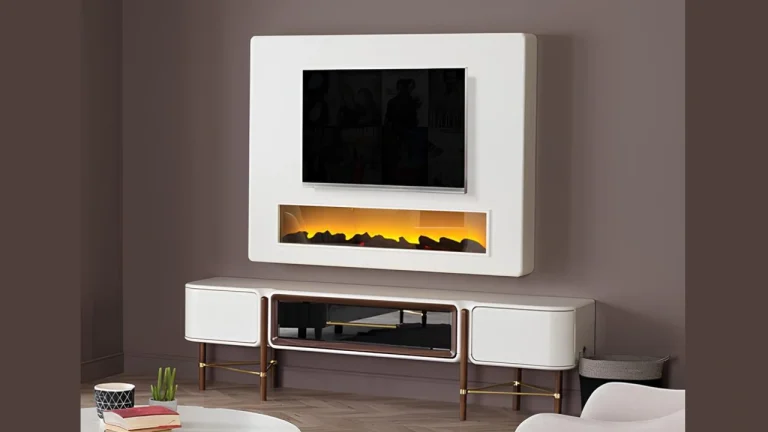
A feature panel that combines the TV niche with a decorative fireplace-effect insert below the screen. It brings the cosy focal point of a hearth into a room that will never need a real fire, and the glow doubles as soft evening lighting. Best for: formal lounges and statement media walls.
18. Glass & Mirror Accent Console
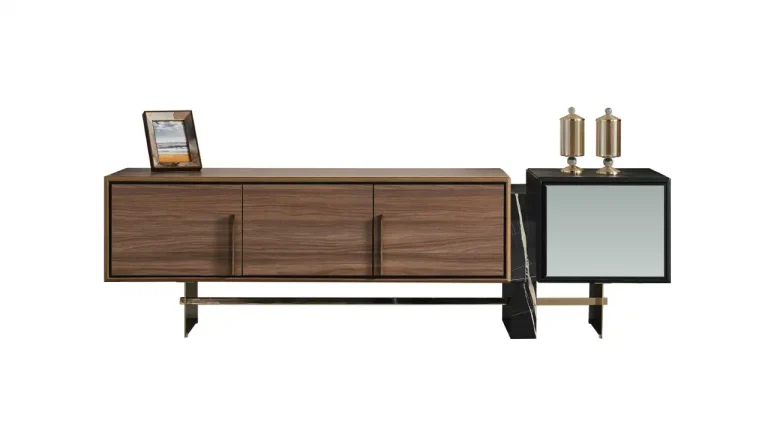
A wooden console with a glass-fronted cabinet, mirrored panel or tempered-glass shelf. Glass lightens a heavy piece and lets lit décor glow at night. Tempered glass resists impact but not scratches, so lift objects rather than dragging them.
19. Simple Minimalist Console

A plain, low cabinet with handle-free doors and one or two neutral tones. Simple TV console designs are the easiest to live with, never date and let artwork or a feature wall do the talking. Best for: calm modern rooms and anyone who changes décor often.
20. Industrial Wood-and-Metal Console

Warm timber set on a black or bronze metal frame, sometimes with mesh or textured doors. It suits loft-style apartments and rooms with exposed concrete or dark accents, and the open frame keeps a long console from feeling bulky.
21. Classic & Royal Console
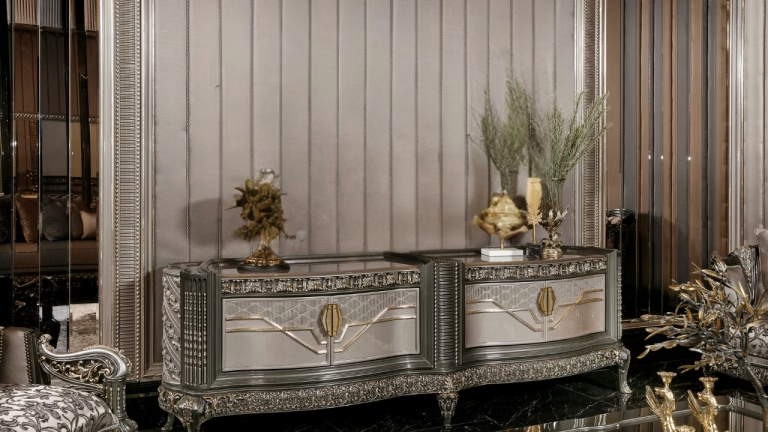
A carved or curved console with gold or silver detailing, rich lacquer and decorative legs. It completes a royal sofa set and suits the formal parlour many Nigerian families keep for guests. See the classic pieces in the style section below.
Wooden TV Stand Designs
Wood is still the most-requested material for a TV stand in Nigeria because it handles daily family use, hides small knocks and sits comfortably with fabric and leather sofas alike. The look changes completely with the tone and the detailing, so it helps to think in three families.
Dark Walnut & Hardwood Consoles

Deep walnut, mahogany or wenge tones with visible grain. They anchor a large room, pair with cream or tan sofas and suit traditional and transitional interiors. Pattern details such as chevron or herringbone fronts add craftsmanship without extra colour.
Light Oak & Natural Wood Consoles
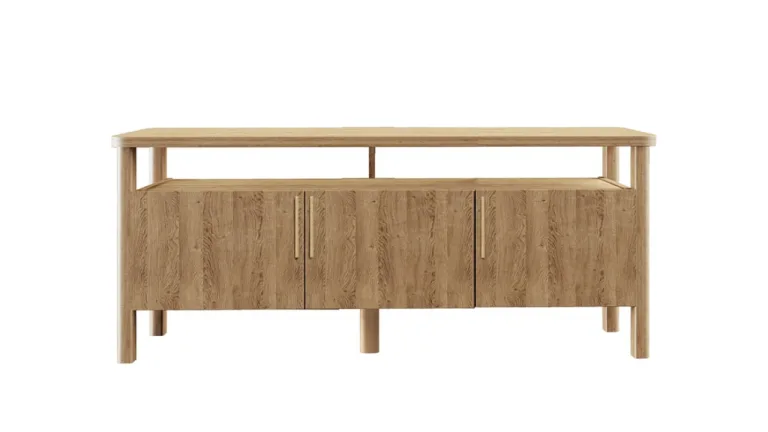
Pale oak, ash or natural teak finishes keep a room bright and relaxed. They work in smaller apartments, in rooms with white walls and grey sofas and anywhere you want a softer, Scandinavian feel.
Wood with Wall Shelves
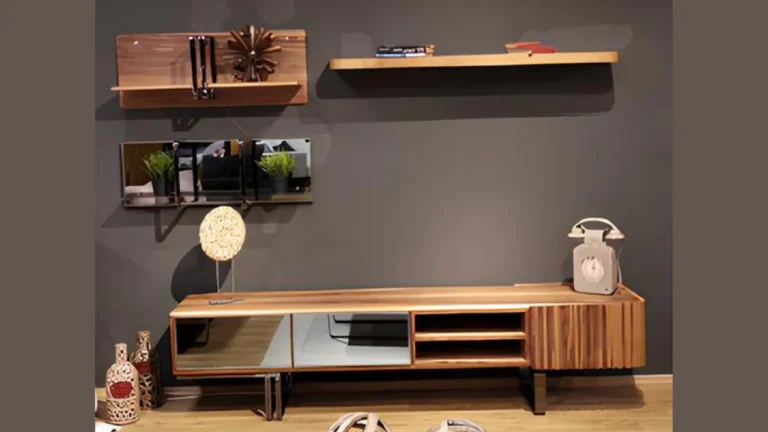
A wooden console with matching floating shelves turns a plain wall into a complete wall console design. Repeat the same wood tone on the shelves and the console so the wall reads as one piece.
Whatever the tone, the carcass matters more than the finish. Solid hardwood and marine plywood resist the humidity that swells cheaper boards in coastal cities, and a veneer over a stable core gives the look of solid wood with less movement. Our guide to types of wood for furniture explains which species and boards hold up best in the Nigerian climate.
Types of TV Console by Interior Style
If you already know the style of your home, start the search from that style rather than from the console. The same television wall looks entirely different in each of these six directions.
Modern Minimalist
A modern TV stand has handle-free fronts, one or two neutral tones and a long, low silhouette. Hide everything behind closed doors, keep the top almost empty and let lighting add warmth. Gloss cream, matte white and pale wood are the usual finishes.
Scandinavian
Light oak or ash, rounded edges, tapered legs and a mix of open and closed storage. The look is warm and practical, and it suits families who want a calm room that still feels lived in. Add a woven basket and a plant on the open shelf.
Mid-Century Modern

Raised on slim tapered legs, with walnut or teak tones, rounded pulls and a slightly retro profile. It pairs well with tufted sofas, globe lamps and patterned rugs, and the raised base keeps a small room feeling open.
Industrial, Rustic & Farmhouse
Industrial consoles combine dark metal frames, warm timber, mesh or textured doors and visible joinery; balance the hard edges with a soft rug and leather or velvet seating. Rustic and farmhouse consoles use distressed or wire-brushed wood, chunky proportions and barn-style sliding doors, and suit homes with exposed brick, earthy colours and natural fabrics.
Classic & Luxury

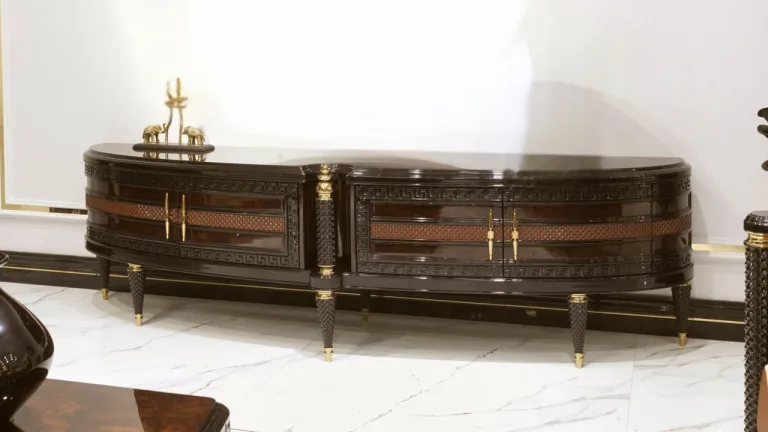
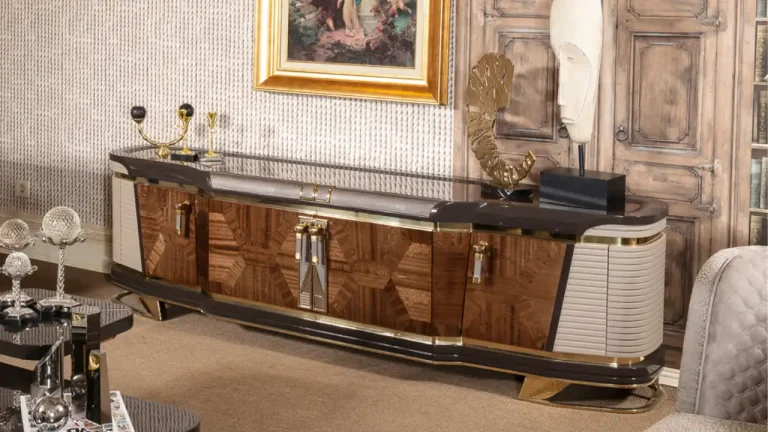
Carving, gold or silver trims, curved fronts and deep lacquer. Classic consoles complete royal sofa sets and suit the formal parlour where guests are received. Keep the rest of the wall restrained, with one mirror or framed artwork, so the craftsmanship is the focus.
Wall Console Design: TV Walls, Panels & Lighting
In Nigerian homes the console is rarely chosen on its own. Buyers increasingly plan the whole television wall, from the panel behind the screen to the lighting and the shelves around it. A wall console design combines a low cabinet with wall-hung elements so the wall works as one composition.
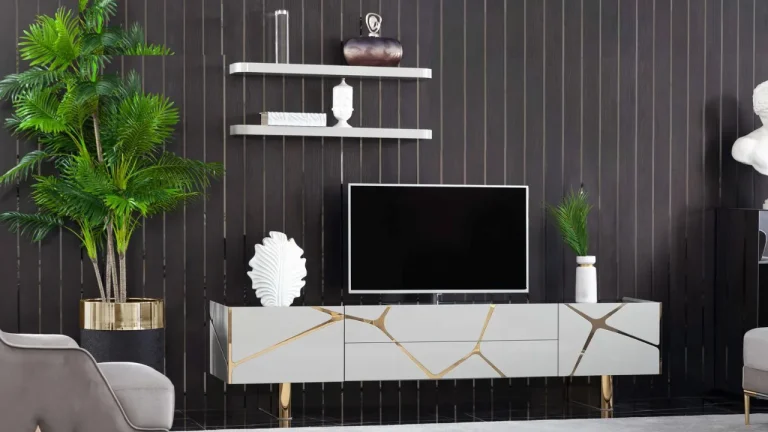
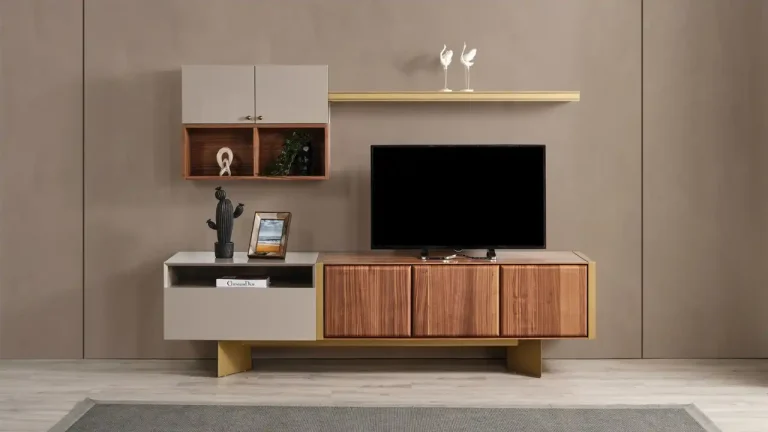
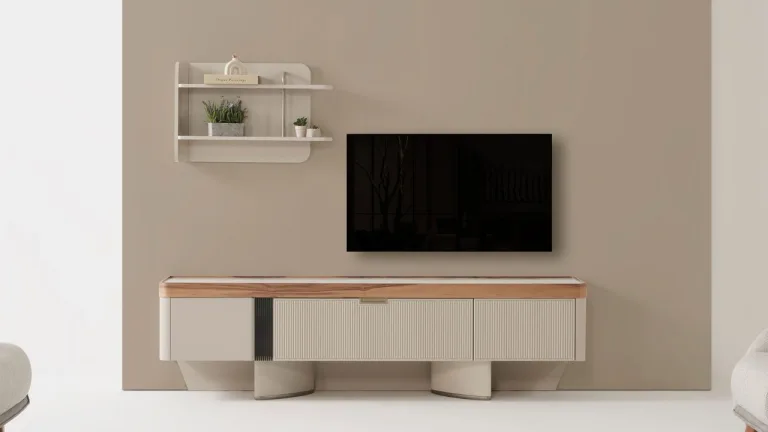
Console Plus Wall Shelves
The simplest wall console design: a low cabinet with a TV shelf, one or two floating shelves or a wall box offset to one side of the screen. Asymmetry looks more natural than two identical shelves, and leaving a hand-width gap between shelf and screen keeps the composition from feeling crowded.
POP TV Wall
A plaster of Paris surround with a recessed niche for the screen, cove lighting and sometimes matching ceiling work. Plan sockets, HDMI conduits and the bracket position before the POP goes up, because changing them afterwards means breaking the finish. A POP design for sitting room ceilings should echo the lines of the TV wall below.
Fluted, PVC, WPC and Stone Panels
Fluted MDF, PVC or WPC wall panels give texture quickly and cleanly, and they hide cables in the battens behind. Stone and marble-effect panels add luxury, while fabric or acoustic felt panels soften echo in tiled rooms with high ceilings. Keep the panel at least as wide as the console so the two read together.
Lighting the TV Wall
Lighting is now a designed layer of the TV wall. LED strip lighting behind the screen reduces eye strain in a dark room, profile lights inside shelves make décor glow, under-cabinet strips make a floating console seem to hover, and a pair of wall sconces frames the wall in the evening. Choose warm white (around 2700 to 3000 K) for living rooms and plan the switch near the sofa.
Colours and Finishes
Walnut, espresso and wenge add warmth and depth; cream, ivory and greige keep the wall calm and bright; charcoal and black make the screen disappear into the wall; gold and brass trims add luxury in small doses. A reliable rule is to match the console to the largest wooden or stone surface in the room and repeat its metal accent once elsewhere.
TV Console Designs for a Small Living Room
Small sitting rooms in Lagos and Abuja apartments need a console that gives storage back without eating floor space. Three principles do most of the work: lift the unit off the floor, keep it shallow, and keep it light in colour.
What Works in a Small Room
A floating or raised-leg console 30 to 40 cm deep keeps the walkway clear and lets the floor run underneath. Light cream, white or pale oak finishes reflect light and make the wall feel wider. Choose closed doors over open shelves so the room never looks cluttered, and mount the TV on the wall to free the console top for one or two décor pieces. A tall, narrow shelf beside the screen adds storage vertically instead of horizontally. For more space-saving layouts, see these small sitting room design ideas.
Corner and Multi-Use Consoles
When the longest wall is taken by the sofa or a window, a corner stand or a console that doubles as a study desk solves the problem. A waist-high console can also divide a studio apartment into a sitting area and a bedroom or dining zone.
Choosing the Right TV Size for a Small Room
Measure the distance from the sofa to the wall before buying the television. For a modern 4K screen, sit roughly 1 to 1.5 times the screen diagonal away: about 1.4 to 2.1 metres for a 55 inch TV and 1.1 to 1.6 metres for a 43 inch TV. A screen that is too large for the room overwhelms the wall and makes even a good console look undersized.
Floating vs Floor-Standing vs Built-In TV Consoles
How the console meets the wall and floor affects cost, installation and how easily you can move it later. Each option suits a different home.
Floating (Wall-Mounted) Consoles
A floating console frees the floor, looks clean and hides cables in the wall. It needs a strong wall: solid concrete or filled blockwork takes heavy-duty anchors well, while hollow sandcrete blocks need the right fixings and the load spread across several points. Ask the installer to check the wall before drilling and keep heavy equipment inside the cabinet light.
Floor-Standing Consoles
A freestanding console needs no drilling, moves with you and carries heavy screens and sound systems without stressing the wall. It suits rented homes and block walls. Choose one with legs or a recessed plinth so it does not look heavy, and anchor tall units to the wall for safety.
Built-In and Custom TV Walls
A built-in unit or POP TV wall is designed around the room, uses every centimetre and hides all wiring. It is permanent, so it suits homeowners rather than renters, and it must be planned with the electrician before finishing. Ready-made consoles are faster to get and easier to replace; custom walls are a renovation decision. Many homes combine the two: a ready-made console set into a POP or panel backdrop.
Match the TV Console Size to Your Screen
The most common television wall mistake is buying a stand narrower than the TV. The console should run at least 15 cm past each edge of the screen, so it is at least 30 cm wider overall, and ideally more. Measure the screen’s actual width rather than the diagonal inch size, then use the table below.
| TV | Screen width | Min. console | Best designs |
|---|---|---|---|
| 43″ | ~95 cm | 125 cm | Compact stand, floating console |
| 50″ – 55″ | ~110 – 122 cm | 150 cm | Floating, modern wooden, two-tone |
| 60″ – 65″ | ~133 – 145 cm | 180 cm | Wooden, marble-top, fluted |
| 70″ – 75″ | ~155 – 166 cm | 200 cm | Full-wall unit, POP TV wall |
| 80″ – 85″+ | ~177 – 188 cm | 240 cm+ | Full-wall unit, framed TV panel |
TV Height and Placement
For a 4K screen, sit roughly 1 to 1.5 times the screen diagonal away: about 1.1 to 1.6 metres for a 43 inch TV, 1.4 to 2.1 metres for 55 inches and 1.9 to 2.9 metres for 75 inches. Sitting closer than this makes the picture look soft; sitting further away wastes the detail of a large screen.
If the TV sits on the console, the centre of the screen should land close to seated eye level, roughly 100 to 110 cm from the floor for a standard sofa. If you wall-mount above a floating console, leave 10 to 15 cm between the console top and the bottom of the screen so the two read as a set. Avoid placing the screen opposite a bright window, where glare washes out the picture in the afternoon, and avoid mounting above head height, which strains the neck.
TV Console Designs by Room
Different rooms ask different things of the console: a statement in a formal lounge, hidden storage in a family room, a small footprint in a bedroom.
Formal Sitting Room
Choose a marble-top console, a classic carved unit or a POP TV wall, and give display priority over storage. Match the finish to the centre table so the room reads as one set; our guide to center table designs shows which tops pair best with which consoles.
Family Living Room
A two-tone or wooden console with plenty of closed storage swallows the decoder, gaming console, remotes and children’s games. Rounded corners and a stable, anchored unit matter more here than delicate finishes.
Open-Plan Living and Dining
A long, low wooden or fluted console keeps sightlines open between zones. A swivel mount lets the screen face the dining table when needed, and a waist-high console can mark the edge of the sitting area.
Bedroom
A compact stand, a floating console or a low dresser works under a bedroom TV. Keep the depth shallow, choose a finish that matches the bedside tables and use the drawers for linen or chargers rather than electronics.
Media and Gaming Room
A full-wall unit with ventilated bays for consoles, a centre shelf sized for the soundbar and closed cabinets for controllers keeps a busy setup tidy. Dark finishes reduce reflections on the screen.
TV Console Materials That Last in Nigerian Homes
Material decides how the console ages under humidity in coastal cities, Harmattan dust in the north and the steady heat of electronics.
Solid Wood & Marine Plywood
The most durable carcass for the Nigerian climate. Marine-grade plywood resists the swelling and delamination that ruin particleboard in humid rooms, and solid hardwood fronts handle daily use without sagging. It is the right base for any console you plan to keep for many years.
MDF, Lacquer and Particleboard
MDF is the workhorse behind most modern gloss and matte finishes: it takes lacquer cleanly and stays flat indoors. Choose moisture-resistant MDF for coastal homes and keep it away from standing water. Particleboard, found in the cheapest flat-pack stands, swells permanently the first time it meets water and its screw holes loosen over time, so avoid it for heavy screens or humid rooms.
Marble, Stone, Metal & Glass
Natural marble is cool, heavy and uniquely veined; engineered quartz gives a similar look with better stain resistance. Both are heavy, so the carcass underneath must be solid wood or plywood. Seal natural marble yearly and wipe spills, especially acidic ones, straight away. Powder-coated steel, brass-tone trims and tempered glass make a console look lighter; use them as accents on a wood or stone body rather than as the whole structure.
Latest TV Console Design Trends for 2026
Three shifts dominate what buyers ask for this year. The first is the floating and raised console: lifting the unit off the floor makes small apartments feel larger, keeps the tiles easy to clean and lets cables drop straight into the wall. The second is texture over gloss: fluted wood, slatted panels, matte stone and curved, rounded fronts are replacing the flat white gloss cabinet of the last decade, usually with warm LED lighting behind or beneath. The third is the integrated TV wall, where the console, panel, shelves and lighting are designed together so the wall looks built-in.
Moving out of fashion: bulky tall cabinets that crowd the screen, cheap stands with exposed particleboard edges, cables looped across the wall and chrome-and-glass units that date quickly. The direction for 2026 is lower, wider, textured, warmly lit and cable-free.
How to Style and Organise a TV Console
A good console can still look cluttered if it is styled badly. Treat the top and the shelves as a small display and keep everything functional out of sight. Styling the console is easier when the rest of the room is planned around it, so it helps to arrange living room furniture before buying décor.
- Use odd numbers and varied heights. Group décor in threes, with one tall piece such as a vase or lamp, one medium piece and one low object such as a tray or stacked books.
- Keep the area in front of the screen clear. Place décor towards the ends of the console so nothing blocks the picture or the TV’s remote sensor.
- Add one living element. A plant or fresh flowers softens the dark rectangle of the screen.
- Hide the technology. Decoders, routers and gaming consoles belong in a ventilated closed bay, with the soundbar on its own shelf or directly below the screen.
- Frame the wall. Balance the screen with artwork, a mirror or a small gallery wall on one side rather than filling every centimetre around it.
Storage for Decoders, Soundbars and Gaming Consoles
Electronics need air. Leave a gap of 5 to 8 cm behind the console, choose cabinets with cable cut-outs or open backs and never close a decoder or games console in a sealed cupboard. A soundbar sits best on a dedicated open shelf at the front of the console or on a bracket directly under a wall-mounted screen, where it is not blocked by doors or décor.
Alternatives to a TV Stand
If a full console does not suit the room, a sideboard or dresser can carry the screen and store far more; a wall-mounted TV with a single floating shelf below keeps a small room open; a bookcase wall with a TV bay works for readers; and a waist-high chest of drawers is a practical bedroom option. Check that any alternative is wide and stable enough for the screen, and anchor it to the wall.
TV Console Mistakes to Avoid, and How to Keep It Safe
The same few mistakes appear in almost every television wall consultation, and most cost a full replacement to fix later.
- Buying a console narrower than the TV. The screen looks top-heavy and unstable. Go at least 30 cm wider than the screen; see the sizing table.
- Ignoring cable management. Plan a socket directly behind the unit and choose a design with a cable channel or closed back.
- Mounting the TV too high or facing a window. Keep the screen centre near seated eye level and away from direct glare.
- Using particleboard for a heavy screen. Shelves sag and edges crumble. Choose plywood or solid wood for any 55 inch or larger TV.
- Leaving tall units unanchored. Fix tall consoles and the TV itself to the wall with anti-tip straps, especially in homes with young children.
- Matching the console to the TV instead of the room. The screen is black and temporary; match the finish to the sofa, centre table and walls.
Care and Cable Management
Dust the console weekly with a soft dry cloth, more often during Harmattan when fine dust settles fast. Wipe gloss and laminate with a barely damp microfibre cloth and never use abrasive cleaners. For cables, run the decoder, console and sound system through one surge-protected extension inside the cabinet, bundle the leads with reusable ties and, for a wall-mounted TV, use paintable trunking or conduits laid inside the wall before plastering.
How to Choose the Right TV Console Design
Three questions narrow the choice quickly. First, the screen: measure its actual width and choose a console at least 30 cm wider. Second, the storage: list what must be hidden (decoder, soundbar, gaming console, router, cables) and choose closed bays to match. Third, the room: pull the console’s finish from the same tone family as the sofa sets and centre table, and let the overall sitting room design decide between a quiet cabinet and a full feature wall.
If you are at the buying stage, our step-by-step guide on how to choose TV console sizes, materials and storage walks through the decision in order, and for budgets by size and finish there is a separate guide to TV stand price in Nigeria.
Bring two photos to the showroom. A console photographs differently from how it reads in a room. Bring one wide photo of your TV wall showing its full width and one of your sofa and centre table, and the team at any Vento showroom in Lagos, Abuja, Port Harcourt or Kaduna can help you match a design, width and finish to your room and screen.
Browse TV Stand Collection Book a Design Consultation
Frequently Asked Questions
What are the best TV stand designs for a modern living room?
The best TV stand designs for a modern living room are floating or raised-leg consoles, fluted wooden consoles, two-tone units with open and closed storage, and full-wall entertainment units for large rooms. Choose a low, wide profile, hide the cables and decoder behind closed doors and match the finish to your sofa, centre table and walls.
Is it better to mount a TV on the wall or put it on a TV stand?
Wall-mounting gives a cleaner look, saves surface space and keeps the screen safe from children, but it needs a strong wall and planned cabling. A TV stand needs no drilling, moves easily and suits rented homes and block walls. Many homes combine both: a wall-mounted TV above a low console that hides the equipment.
How wide should a TV stand be compared with the TV?
A TV stand should be at least 30 cm wider than the television, about 15 cm past each screen edge. A 43 inch TV needs about 125 cm, a 55 inch TV 150 cm and a 65 inch TV 180 cm. A 55 inch TV fits a 48 inch stand only if its feet fit, and it will look top-heavy.
What is the best TV console design for a small living room?
The best TV console for a small living room is a floating or raised-leg unit about 30 to 40 cm deep in a light finish, with closed doors to hide clutter. Mount the TV on the wall, add one tall narrow shelf for vertical storage and keep the screen size in proportion to the seating distance.
What are the latest TV console design trends for 2026?
The latest TV console design trends for 2026 are floating and raised consoles, fluted and slatted wood, matte stone and marble-look tops, rounded curved fronts, warm LED lighting behind or under the unit, and integrated TV walls where the console, panel and shelves are designed together. Bulky tall cabinets and visible cables are going out of style.
How do I style and organise a TV console?
Style a TV console by grouping décor in threes with varied heights, keeping the area in front of the screen clear and adding one plant or vase. Hide decoders, routers and gaming consoles in ventilated closed bays, give the soundbar its own open shelf and balance the wall with artwork or a mirror on one side.
What can I use instead of a TV stand?
Good alternatives to a TV stand are a sideboard or dresser, a wall-mounted TV with a single floating shelf below, a bookcase wall with a TV bay or a low chest of drawers in a bedroom. Whatever you choose must be wider than the screen, stable enough for its weight and anchored to the wall.
How do I hide cables on a TV console?
Hide TV cables by placing a socket directly behind the console, running all equipment through one surge-protected extension inside the cabinet and choosing a console with a cable channel or open back. For a wall-mounted TV, use paintable trunking on the wall or conduits laid inside the wall before the POP or plaster is finished.
Are floating TV consoles strong enough for a big TV?
Floating TV consoles are strong enough when they are fixed into solid concrete or filled blockwork with heavy-duty anchors and brackets rated for the load. Hollow sandcrete blocks need the right fixings and several anchor points. For very large screens, wall-mount the TV on its own bracket and use the console for storage.
What material is best for a TV console in Nigeria?
Solid wood and marine plywood are the most durable TV console materials in Nigeria because they resist the humidity that swells particleboard in coastal cities. Moisture-resistant MDF with a lacquer or laminate finish is a good choice for modern looks. Avoid plain particleboard for heavy screens or humid rooms.
One thought on “TV Stand & TV Console Designs in Nigeria 2026”
Comments are closed.